Print Your Practice
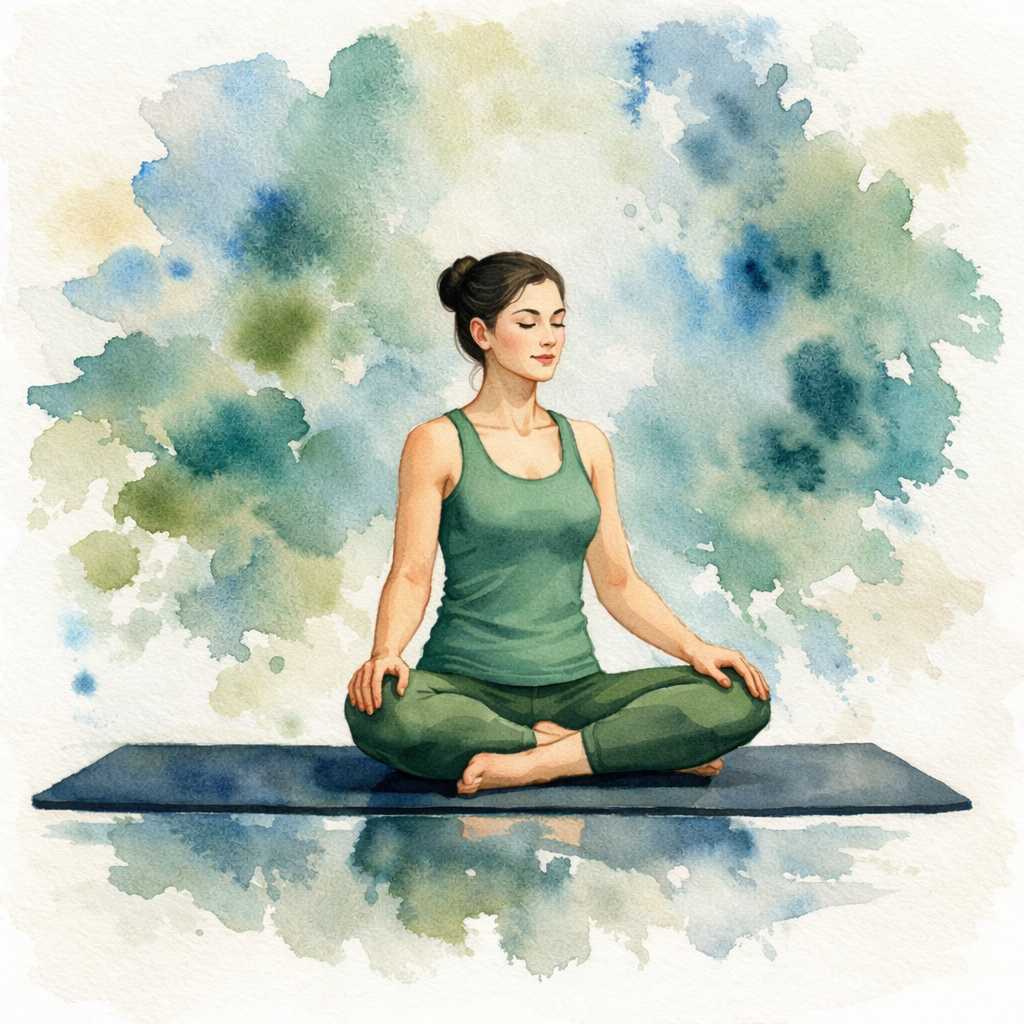
Seated Breath Awareness
Purpose
Grounds attention, activates the parasympathetic nervous system, and brings awareness to the present moment. This is the entry point of the class — the moment students shift from their day into their practice.
Key Cues
- • Sit tall with a long spine, shoulders relaxed
- • Close your eyes and settle in
- • Breathe in through the nose, sigh it out through the mouth
- • Let go of whatever you brought to the mat
Muscles
diaphragm · intercostals · pelvic floor
Modifications
- • Sit on a blanket or block to elevate hips
- • Lean against a wall for back support
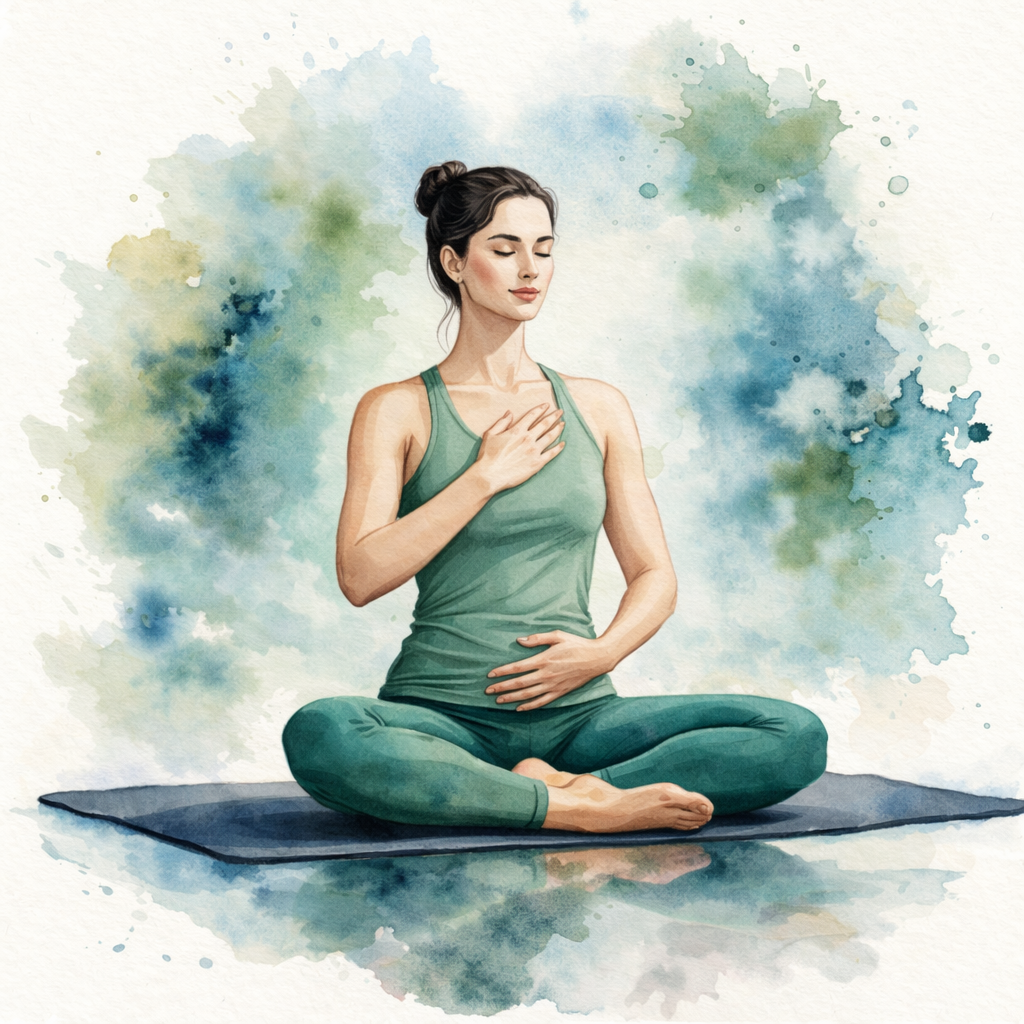
Box Breath
Sama Vritti
SAH-mah VRIT-tee
Purpose
Regulates the nervous system by equalizing the inhale, hold, exhale, and pause. Builds breath awareness and calms the mind before movement begins.
Key Cues
- • Inhale slowly for a count of 4
- • Hold gently at the top for 4
- • Exhale steadily for 4
- • Pause softly at the bottom for 4
Muscles
diaphragm · intercostals · transverse abdominis
Modifications
- • Shorten count to 3 if 4 feels too long
- • Drop the holds and just equalize inhale/exhale
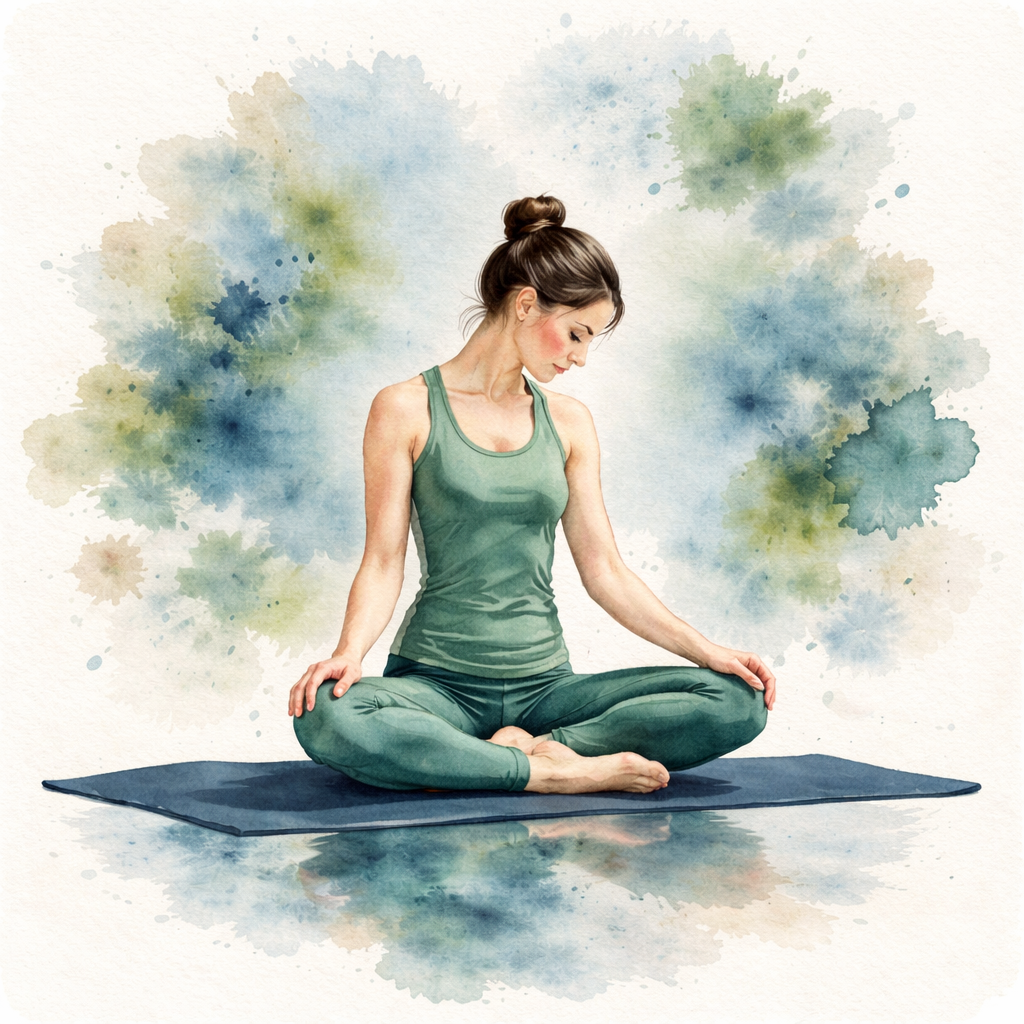
Gentle Head Nods
Purpose
Gently mobilizes the cervical spine and releases held tension in the neck and jaw. Not a stretch — just a waking-up signal for the upper body.
Key Cues
- • Let chin drift down toward chest, then back to neutral
- • Turn head softly side to side — a quiet 'no'
- • Move slowly — we're waking up, not stretching
Muscles
sternocleidomastoid · upper trapezius · scalenes
Modifications
- • Keep range of motion very small if neck is sensitive
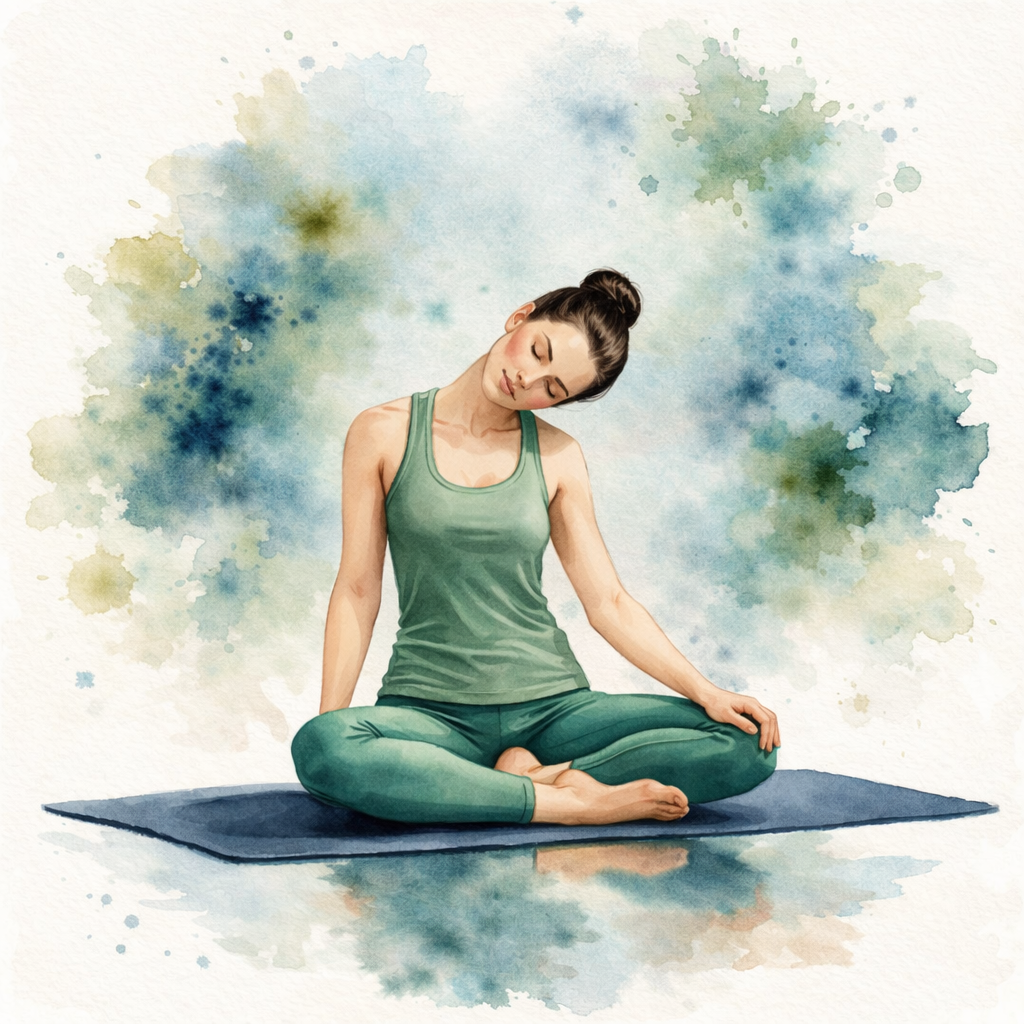
Neck Side Stretch
Purpose
Releases tension in the lateral neck muscles and upper trapezius. Opens the side of the neck that holds stress from daily posture habits.
Key Cues
- • Sit tall — inhale to lengthen the spine first
- • Exhale and drop right ear toward right shoulder
- • No forcing — just a soft release
- • Inhale back to center, exhale to the other side
Muscles
upper trapezius · scalenes · levator scapulae
Modifications
- • Place opposite hand on the floor for support
- • Skip if any neck injuries are present
Alerts
- • Avoid if you have cervical disc issues — keep range small
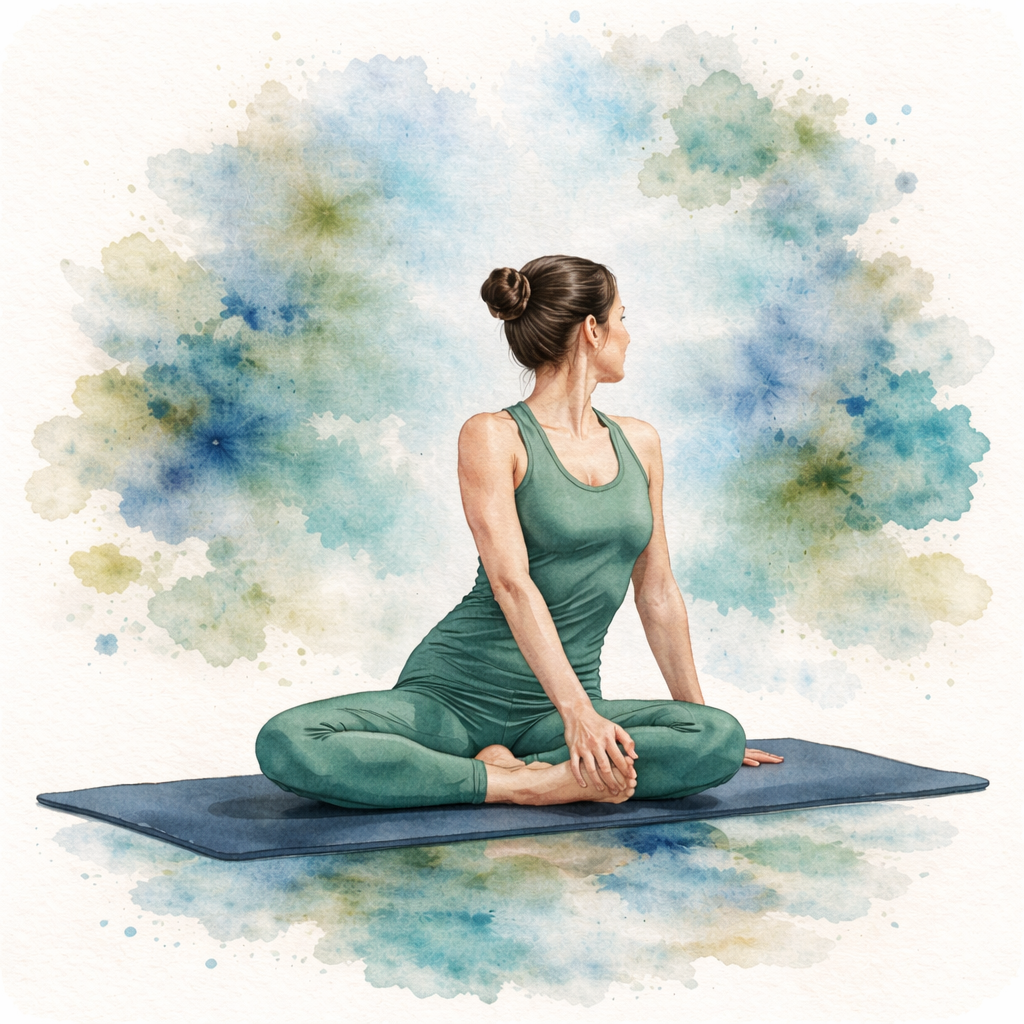
Simple Seated Twist
Parivrtta Sukhasana
pah-ree-VRIT-tah soo-KAH-sah-nah
Purpose
Lengthens the spine, massages the abdominal organs, and gently mobilizes the thoracic vertebrae. Introduces spinal rotation early in the class.
Key Cues
- • Inhale to lengthen the spine before twisting
- • Exhale to gently rotate — don't force
- • Right hand behind hip, left hand on right thigh or knee
- • Let your gaze travel toward the back of the room
Muscles
obliques · erector spinae · multifidus · transverse abdominis
Modifications
- • Sit on a block or blanket to elevate hips
- • Keep the twist gentle — focus on length, not depth
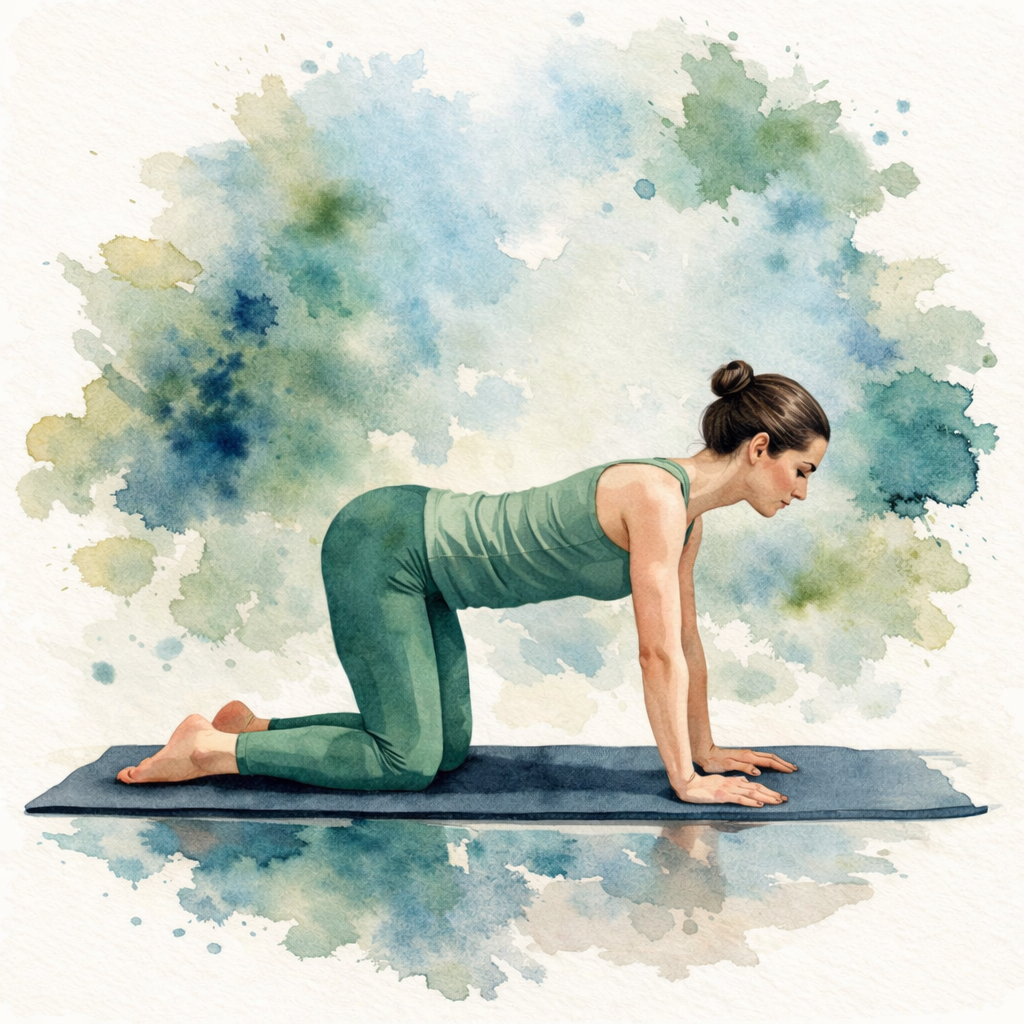
Table Top
Bharmanasana
bar-mah-NAH-sah-nah
Purpose
Establishes a neutral spine and shoulder alignment. Foundational prep for Cat-Cow, arm balances, and transitions between floor and standing.
Key Cues
- • Wrists under shoulders, knees under hips
- • Find a flat back — neutral spine
- • Press into the mat evenly through both hands
Muscles
core stabilizers · deltoids · quadriceps
Modifications
- • Place a blanket under knees for padding
- • Use fists instead of flat palms if wrists are sensitive
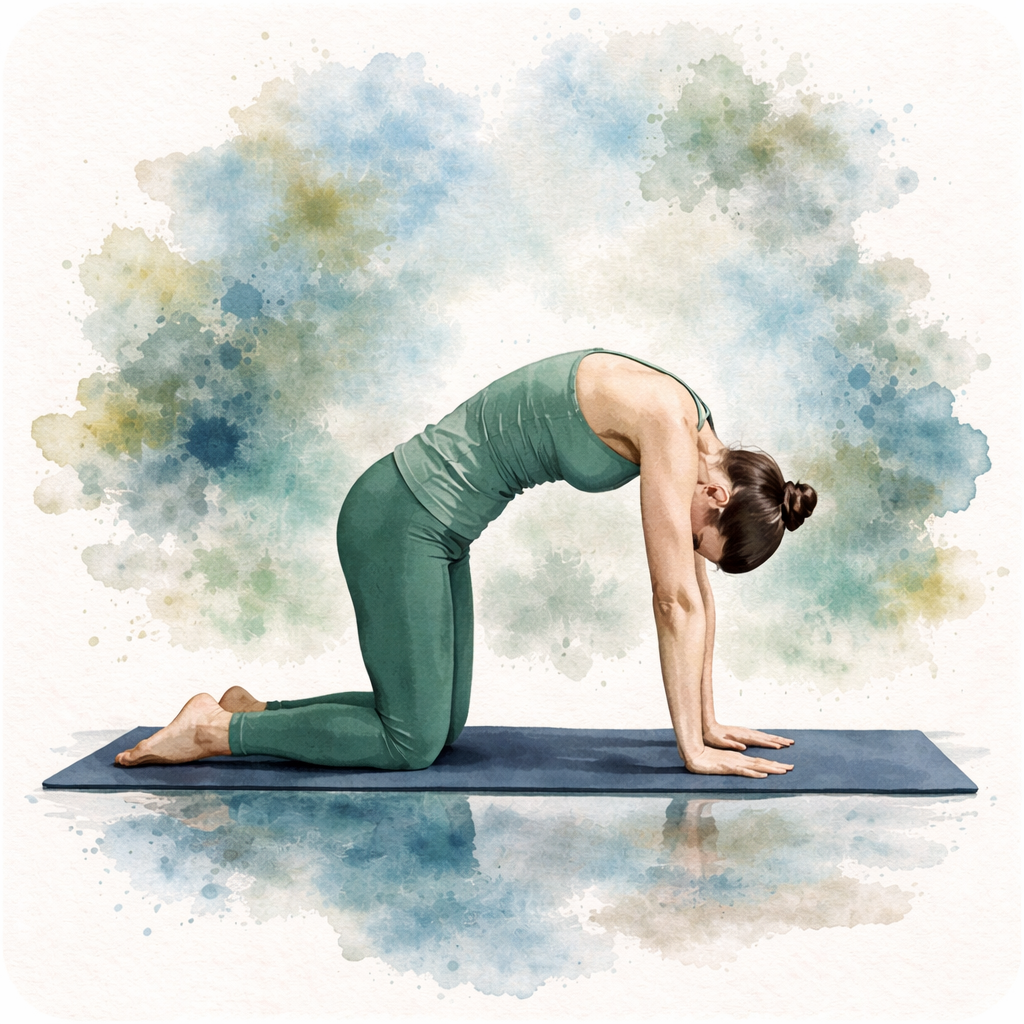
Cat Cow
Marjaryasana / Bitilasana
mar-jar-ee-AH-sah-nah / bee-tee-LAH-sah-nah
Purpose
Improves spinal flexibility, warms the back body, massages the spine, and links breath to movement. This is often the first breath-movement connection of the class.
Key Cues
- • Inhale — belly drops, gaze lifts (Cow)
- • Exhale — spine rounds up toward the sky (Cat)
- • Flow with your breath, not a fixed rhythm
- • Let the movement originate from the pelvis
Muscles
erector spinae · rectus abdominis · hip flexors · neck extensors
Modifications
- • Keep movements small if the back is tight
- • Place a blanket under knees
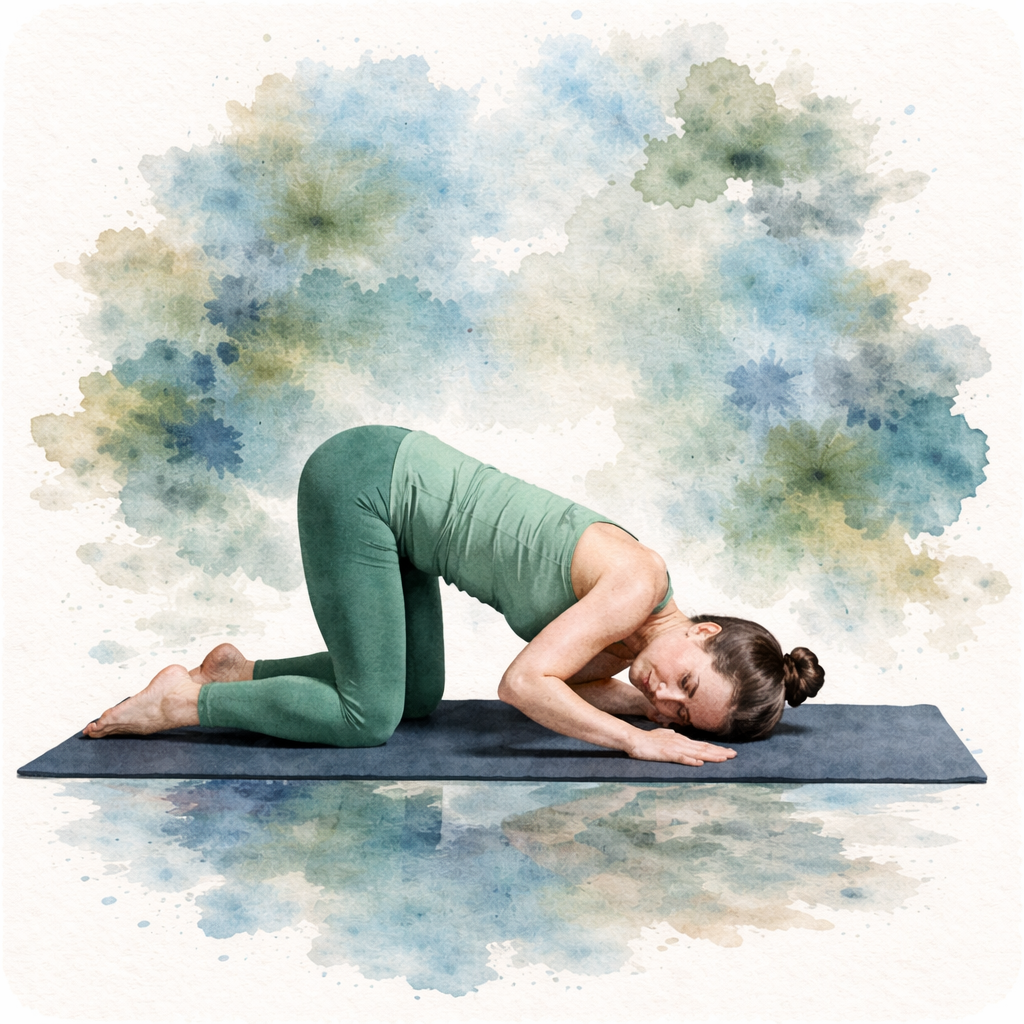
Thread the Needle
Parsva Balasana
PARS-vah bah-LAH-sah-nah
Purpose
Opens the shoulders, chest, and thoracic spine. Releases tension between the shoulder blades and introduces gentle spinal rotation.
Key Cues
- • From Table Top — inhale, reach right arm to the sky
- • Exhale, slide that arm under your body along the mat
- • Right shoulder and cheek rest down
- • Breathe into the gentle twist
Muscles
rhomboids · posterior deltoids · thoracic rotators · obliques
Modifications
- • Use a block under the head for support
- • Keep the twist shallow if shoulders are tight
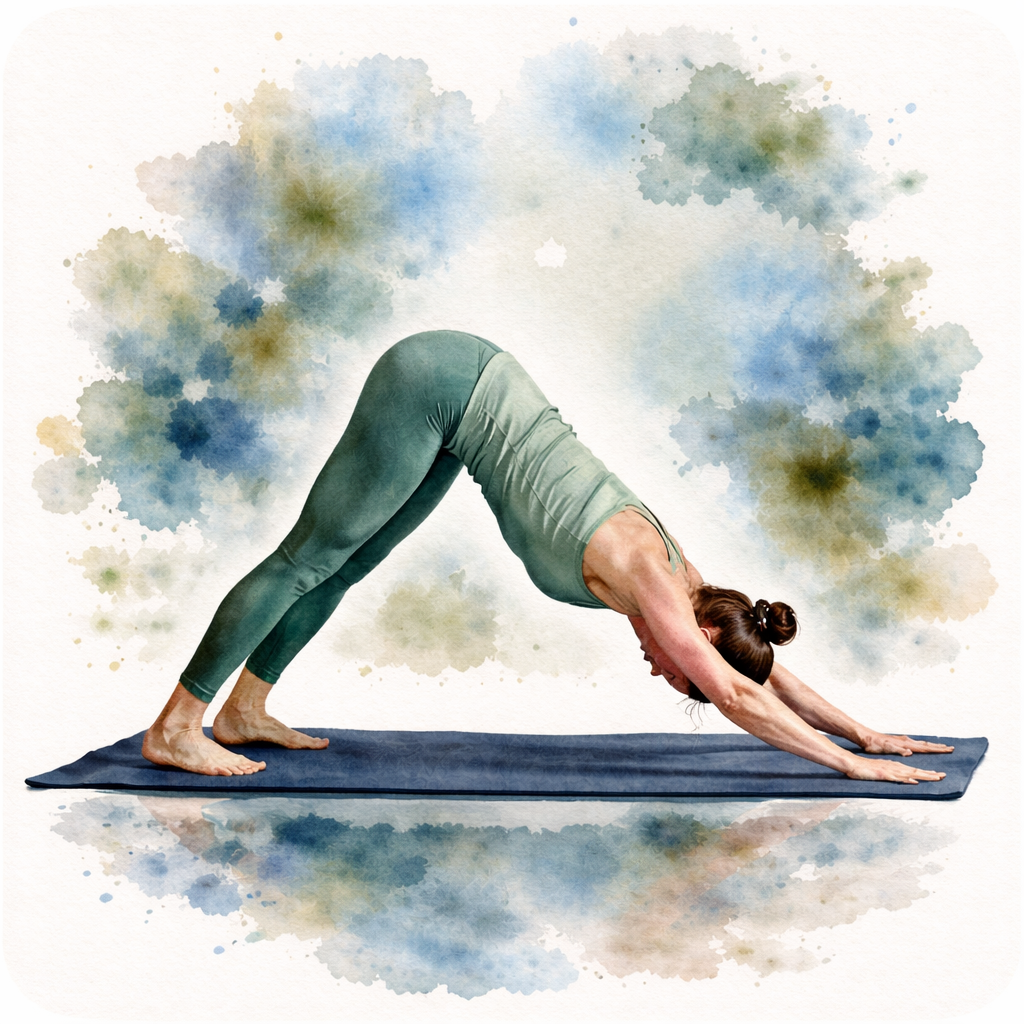
Downward Facing Dog
Adho Mukha Svanasana
AH-doh MOO-kah shvah-NAH-sah-nah
Purpose
Lengthens the hamstrings and calves, strengthens the arms and shoulders, and decompresses the spine. An active resting pose that resets the body between flows.
Key Cues
- • Press hands into the mat, hips up and back
- • Press heels toward the floor — bend in knees is fine
- • Pedal feet gently to wake up the legs
- • Let your head hang between your arms
Muscles
deltoids · hamstrings · calves · latissimus dorsi · core stabilizers
Modifications
- • Bend knees generously to focus on spine length
- • Walk hands slightly forward if wrists are tight
- • Use a wedge under palms for wrist sensitivity
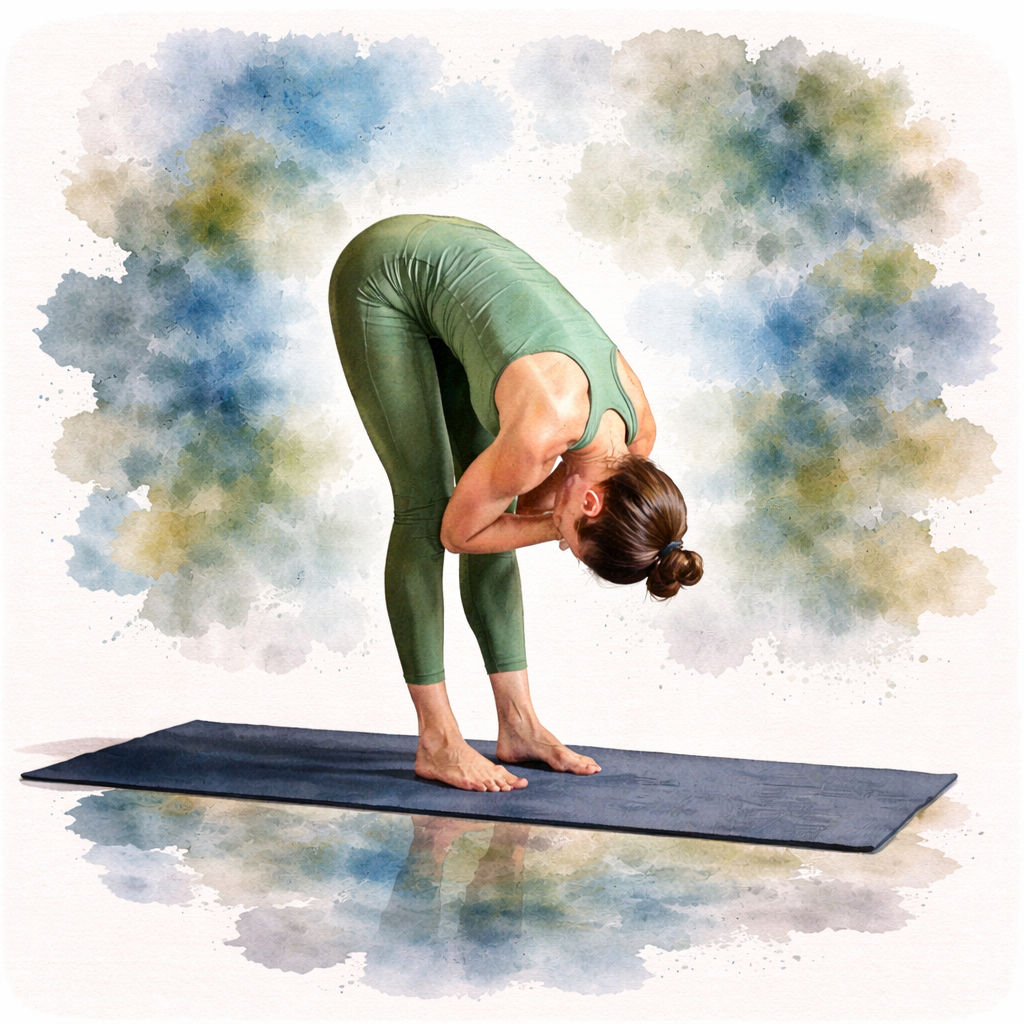
Ragdoll
Uttanasana (variation)
oo-tahn-AH-sah-nah
Purpose
Releases the lower back and hamstrings, calms the nervous system, and facilitates the transition from floor to standing. The loose, heavy quality is intentional — letting gravity do the work.
Key Cues
- • Walk feet toward hands from Down Dog
- • Bend knees generously
- • Let body go completely loose and heavy
- • Gently sway or shift weight side to side
Muscles
hamstrings · erector spinae · calves
Modifications
- • Bend knees deeply — straight legs are not the goal
- • Hold opposite elbows to add gentle traction
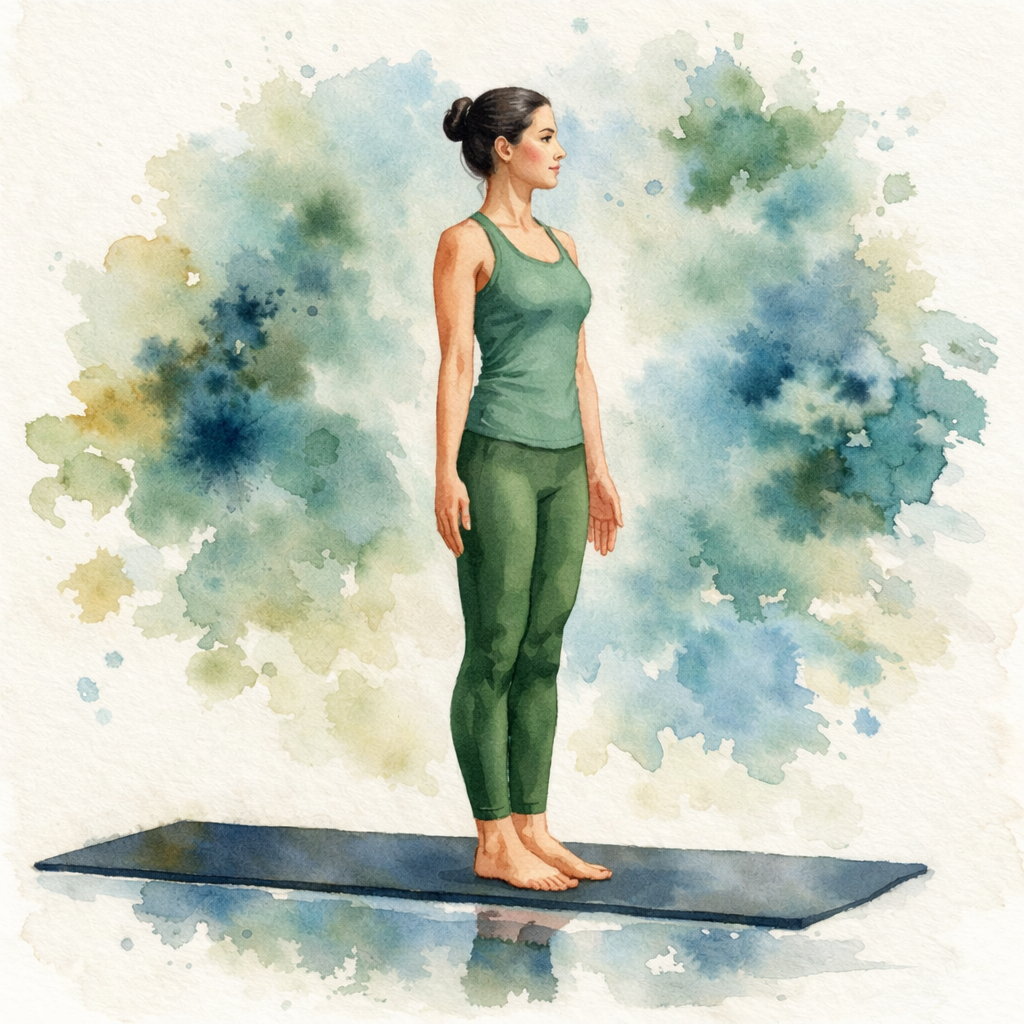
Mountain Pose
Tadasana
tah-DAH-sah-nah
Purpose
Establishes upright posture, activates full-body alignment, grounds the feet, and creates a stable base for all standing poses. The reference point you return to throughout class.
Key Cues
- • Feet hip-width apart, weight evenly distributed
- • Arms soft at sides, shoulders relaxed
- • Roll up one vertebra at a time, head last to rise
- • Stand tall — crown of head reaching toward the sky
Muscles
quadriceps · core stabilizers · glutes · foot arches
Modifications
- • Widen stance for more stability
- • Slight bend in knees if hamstrings are tight
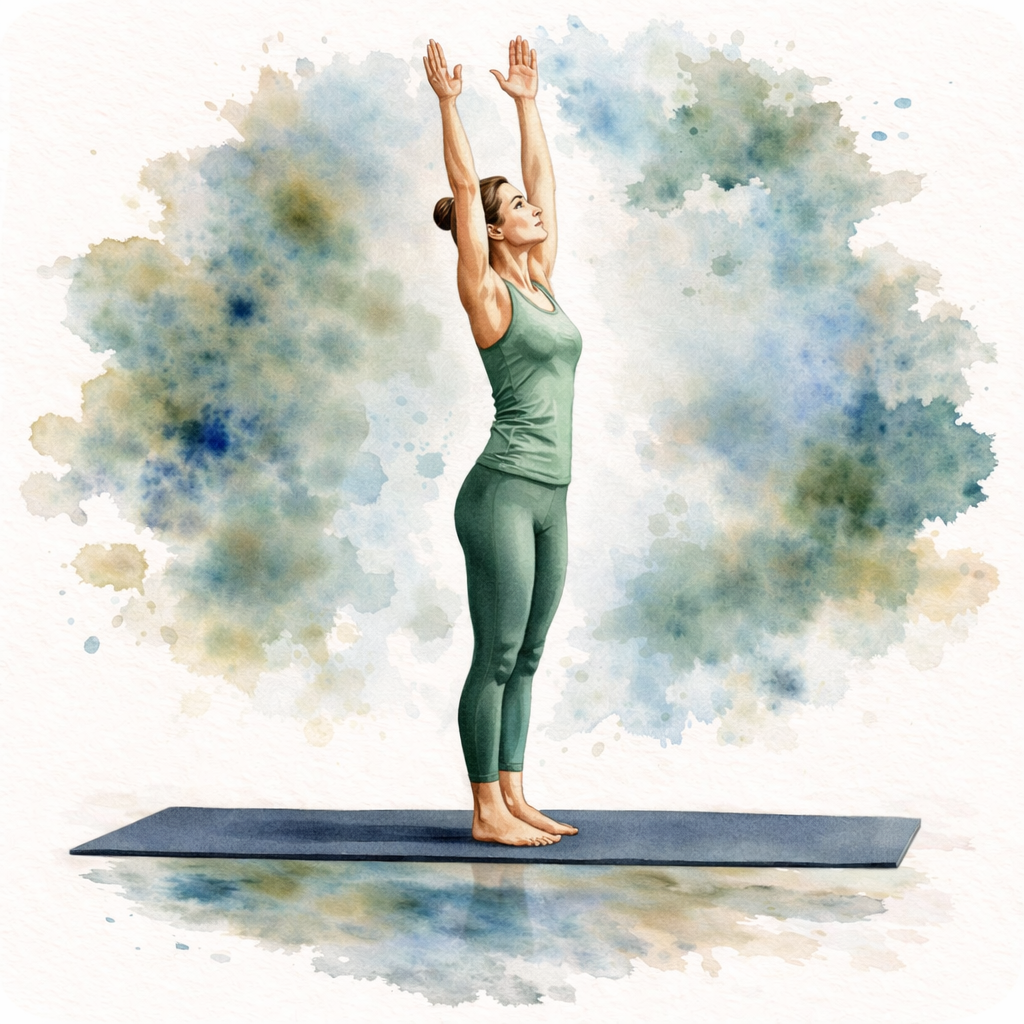
Extended Tadasana
Urdhva Hastasana
OORD-vah hah-STAH-sah-nah
Purpose
Extends the reach of Mountain Pose overhead, opening the chest and lengthening the side body. Prepares for Forward Fold in the sun salutation flow.
Key Cues
- • Inhale, sweep arms out wide and overhead
- • Reach fingertips toward the sky
- • Grow tall through your whole body
- • Keep shoulders away from ears
Muscles
deltoids · latissimus dorsi · core stabilizers · triceps
Modifications
- • Hands can stay shoulder-width apart if shoulders are tight
- • Slight bend in elbows is fine
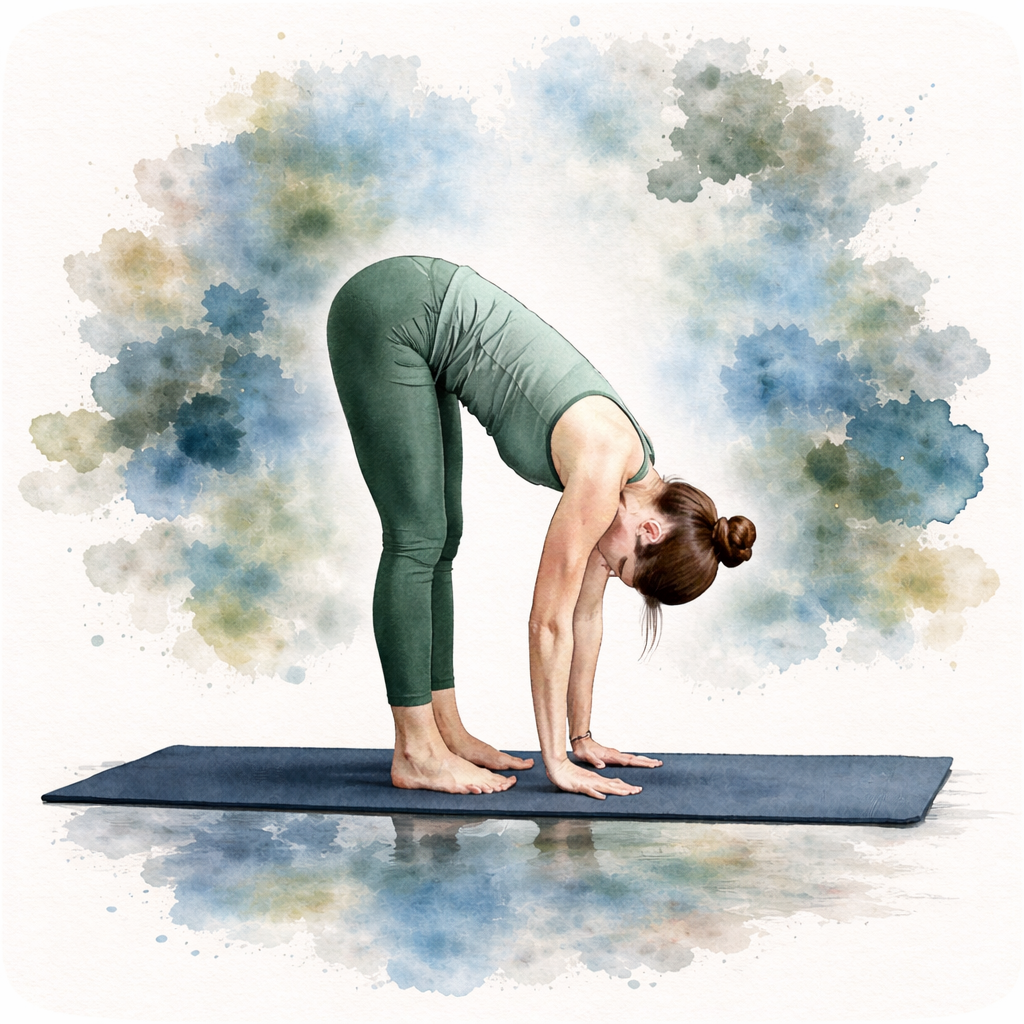
Forward Fold
Uttanasana
oo-tahn-AH-sah-nah
Purpose
Stretches the hamstrings, calves, and lower back. Calms the mind, stimulates abdominal organs, and serves as a key transition in sun salutations.
Key Cues
- • Hinge at the hips — not the waist
- • Soften knees as much as you need
- • Let arms and head hang heavy
- • Weight stays in the center of your feet
Muscles
hamstrings · calves · erector spinae · glutes
Modifications
- • Bend knees deeply — this is about the spine, not straight legs
- • Rest hands on blocks if they don't reach the floor
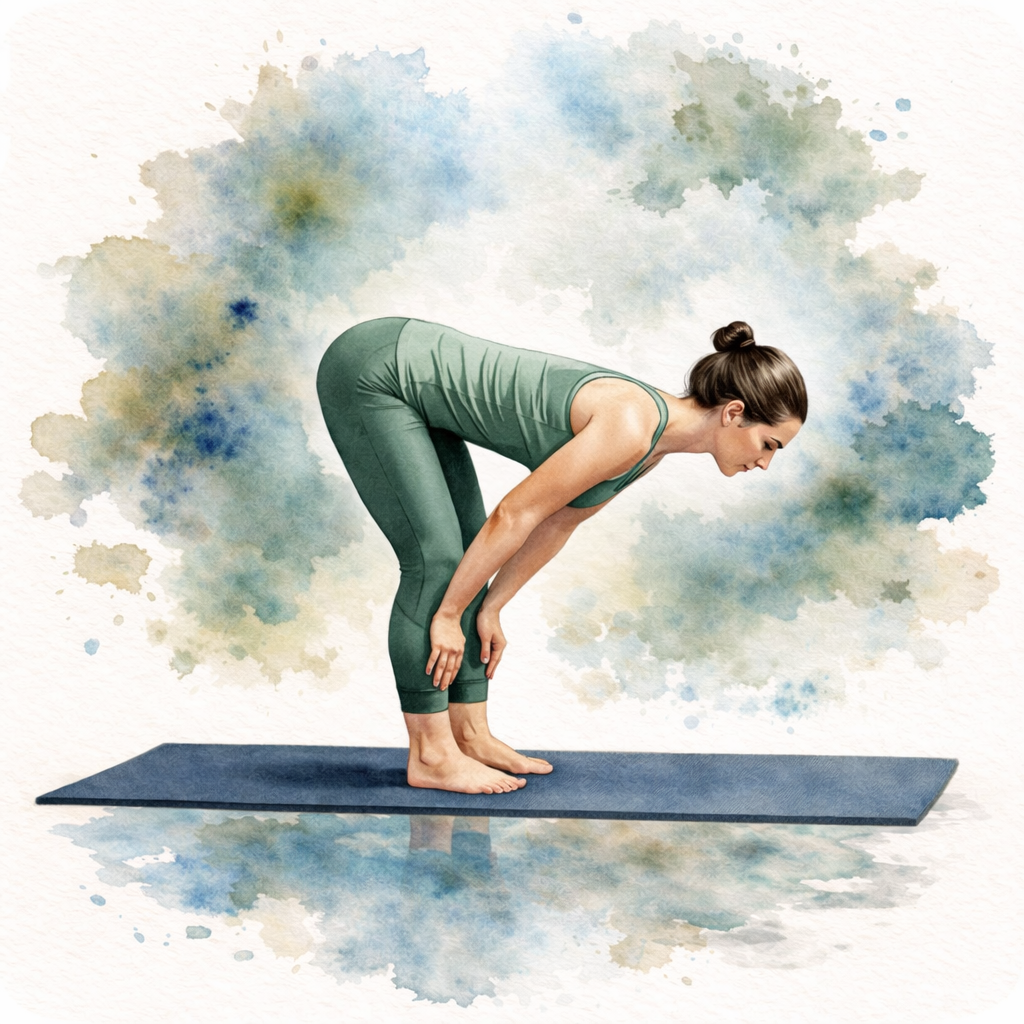
Halfway Lift
Ardha Uttanasana
ARE-dah oo-tahn-AH-sah-nah
Purpose
Lengthens the spine, engages the core, and prepares the back for the transition to plank. Creates a flat-back position that trains spinal awareness.
Key Cues
- • Inhale and lift chest halfway
- • Lengthen the spine — long flat back
- • Hands on shins or floating
- • Gaze slightly forward, neck neutral
Muscles
erector spinae · core stabilizers · quadriceps
Modifications
- • Hands on shins for support
- • Don't worry about how high you lift — focus on a long spine
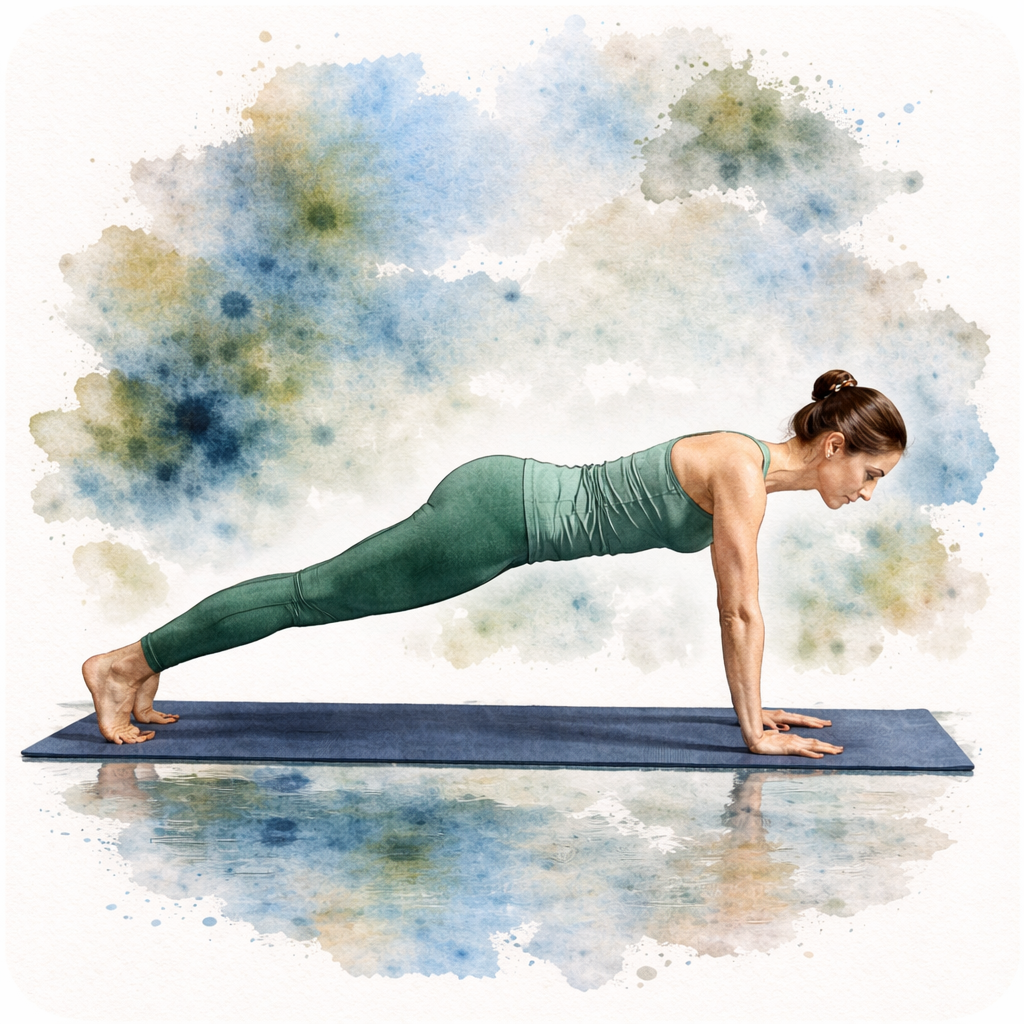
High Plank
Kumbhakasana
koom-bah-KAH-sah-nah
Purpose
Builds full-body strength in the core, shoulders, arms, and glutes. Teaches alignment under load and resets form during transitions.
Key Cues
- • Shoulders directly over wrists
- • Body in one long line — head to heels
- • Core engaged, don't let hips sag or pike
- • Press the floor away with your hands
Muscles
rectus abdominis · deltoids · pectorals · quadriceps · glutes
Modifications
- • Drop knees to the floor for a modified plank
- • Use forearms if wrists are sensitive
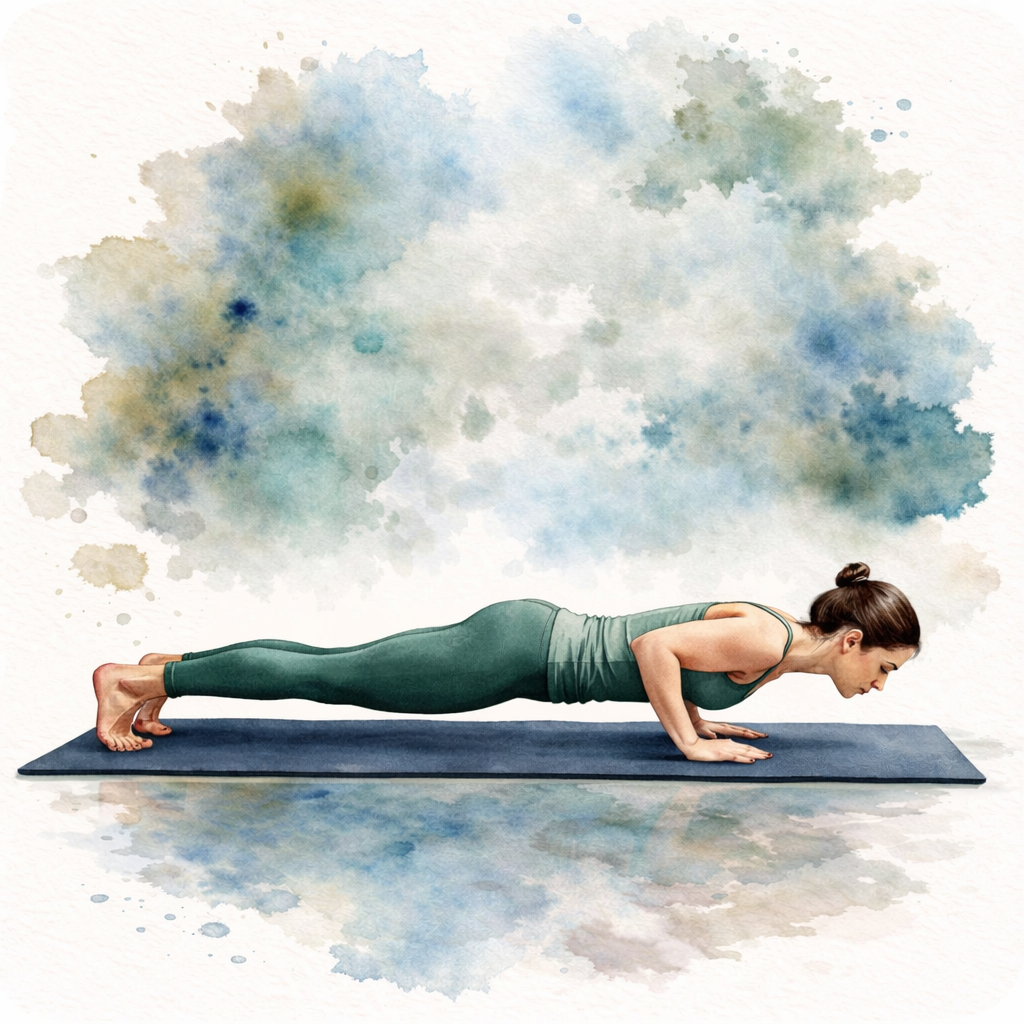
Chaturanga
Chaturanga Dandasana
chah-too-RAHN-gah dahn-DAH-sah-nah
Purpose
Strengthens the triceps, chest, and core. Teaches controlled lowering and is foundational for arm balances. One of the most technically demanding poses in a vinyasa flow.
Key Cues
- • Elbows hug close to the body
- • Lower only halfway — elbows at 90 degrees
- • Keep the body in one line as you lower
- • Core stays engaged throughout
Muscles
triceps · pectorals · anterior deltoids · core stabilizers
Modifications
- • Lower knees first for a modified version
- • Skip entirely and go directly from plank to cobra
Alerts
- • Avoid if you have shoulder injuries
- • Don't let shoulders dip below elbows — protects the rotator cuff
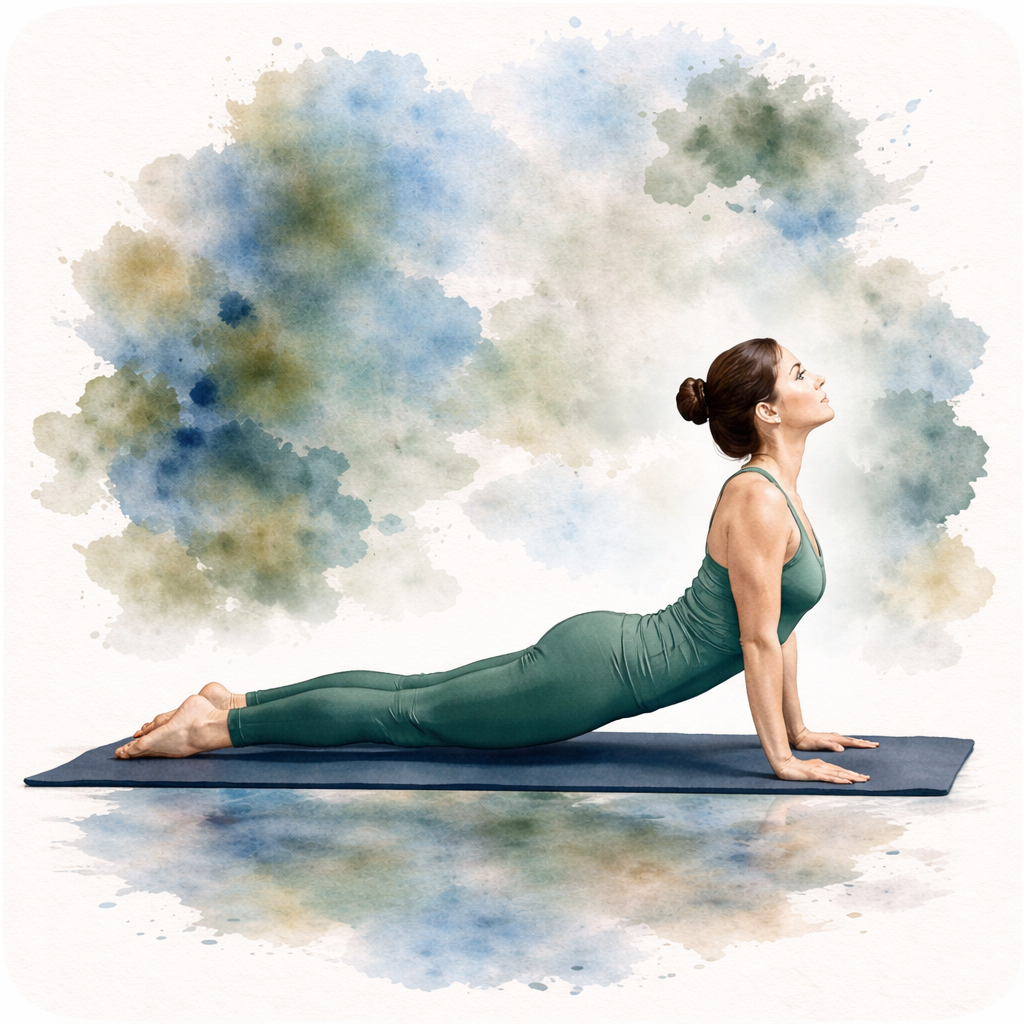
Cobra / Upward Facing Dog
Bhujangasana / Urdhva Mukha Svanasana
boo-jahn-GAH-sah-nah / OORD-vah MOO-kah shvah-NAH-sah-nah
Purpose
Opens the chest, strengthens the back extensors, counteracts forward flexion, and improves spinal extension. Cobra is gentler; Upward Dog is more intense.
Key Cues
- • Cobra: press up gently, elbows bent, hips on the floor
- • Up Dog: arms straighten, thighs lift off the mat
- • Open the chest and roll shoulders back
- • Gaze forward or slightly up — don't crunch the neck
Muscles
erector spinae · glutes · deltoids · pectorals · hip flexors
Modifications
- • Baby Cobra — just peel the chest off the floor slightly
- • Stay with Cobra if lower back is sensitive
Alerts
- • Avoid deep backbends if you have lower back issues
- • Engage the glutes to protect the lumbar spine
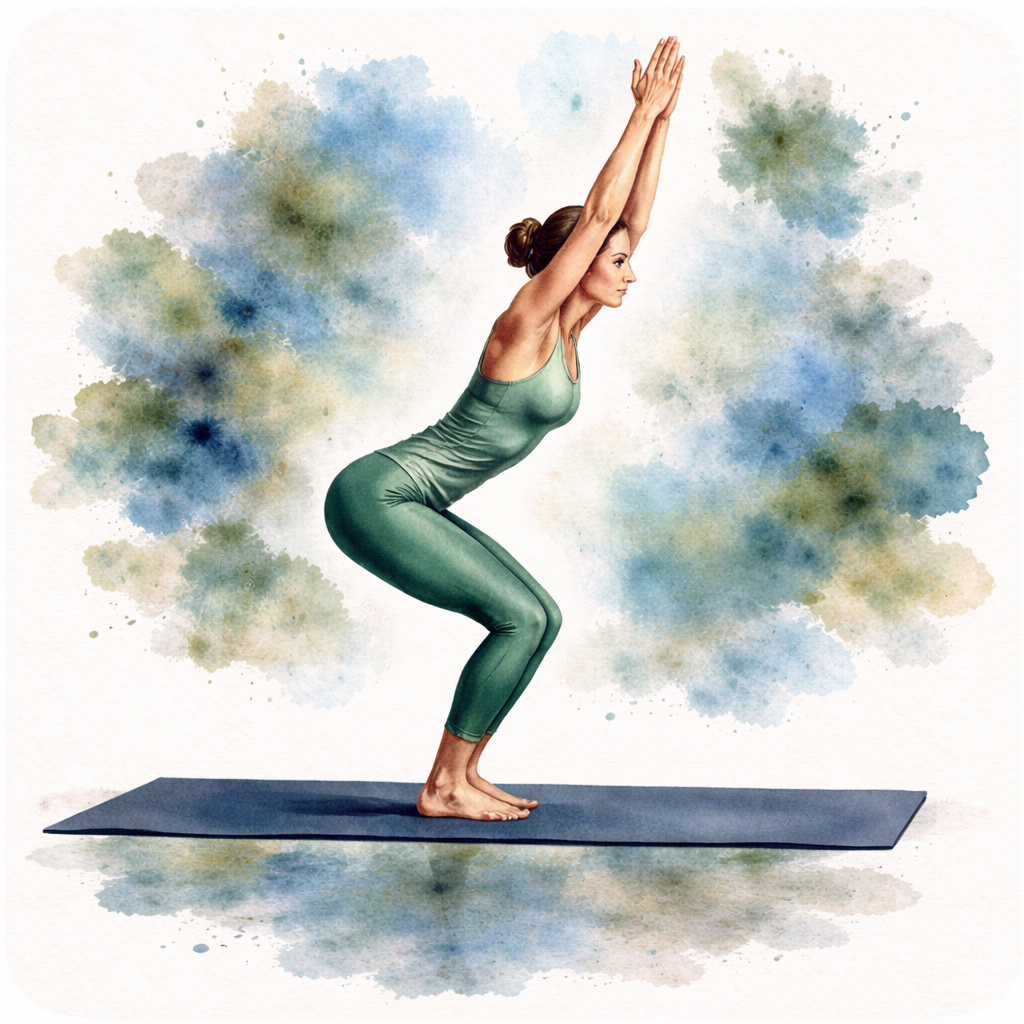
Chair Pose
Utkatasana
oot-kah-TAH-sah-nah
Purpose
Builds strength in the quadriceps, glutes, and ankles. Challenges balance and cultivates mental endurance — it's uncomfortable by design.
Key Cues
- • Sink hips back and down as if sitting in a chair
- • Weight in the heels — you should be able to wriggle your toes
- • Arms overhead or at heart center
- • Keep the chest lifted, don't round forward
Muscles
quadriceps · glutes · hip flexors · erector spinae
Modifications
- • Don't sink as deep — half Chair is fine
- • Hands at heart center if shoulders are tight
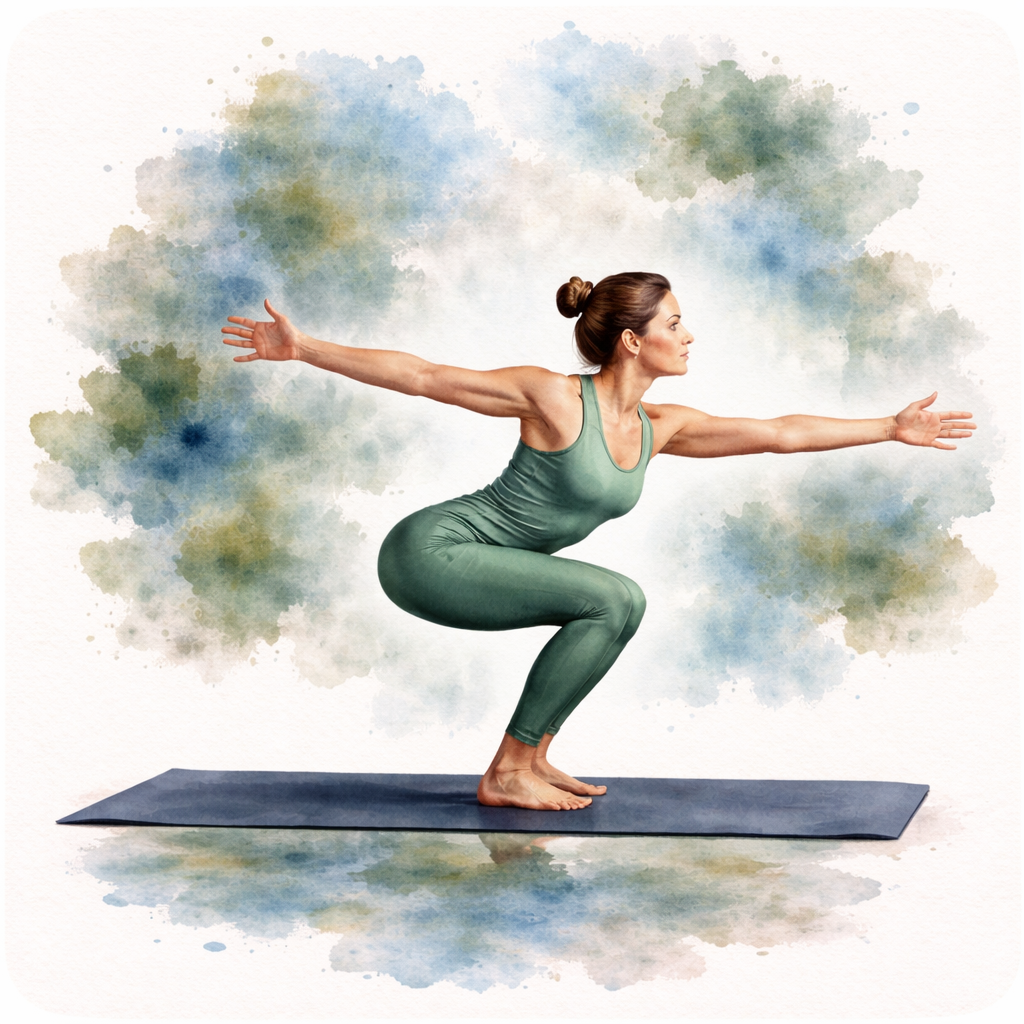
Open Arm Twist in Chair
Parivrtta Utkatasana (variation)
pah-ree-VRIT-tah oot-kah-TAH-sah-nah
Purpose
Adds rotation to the spine from the Chair Pose base. Stretches the outer hip and IT band, massages the internal organs, and builds rotational strength.
Key Cues
- • Bring hands to heart center first
- • Twist and extend arms wide to one side
- • Inhale back to center, then twist the other way
- • Keep hips level — the twist comes from the thoracic spine
Muscles
obliques · erector spinae · quadriceps · glutes
Modifications
- • Keep hands at heart center instead of extending arms
- • Stand slightly taller if the twist feels too intense
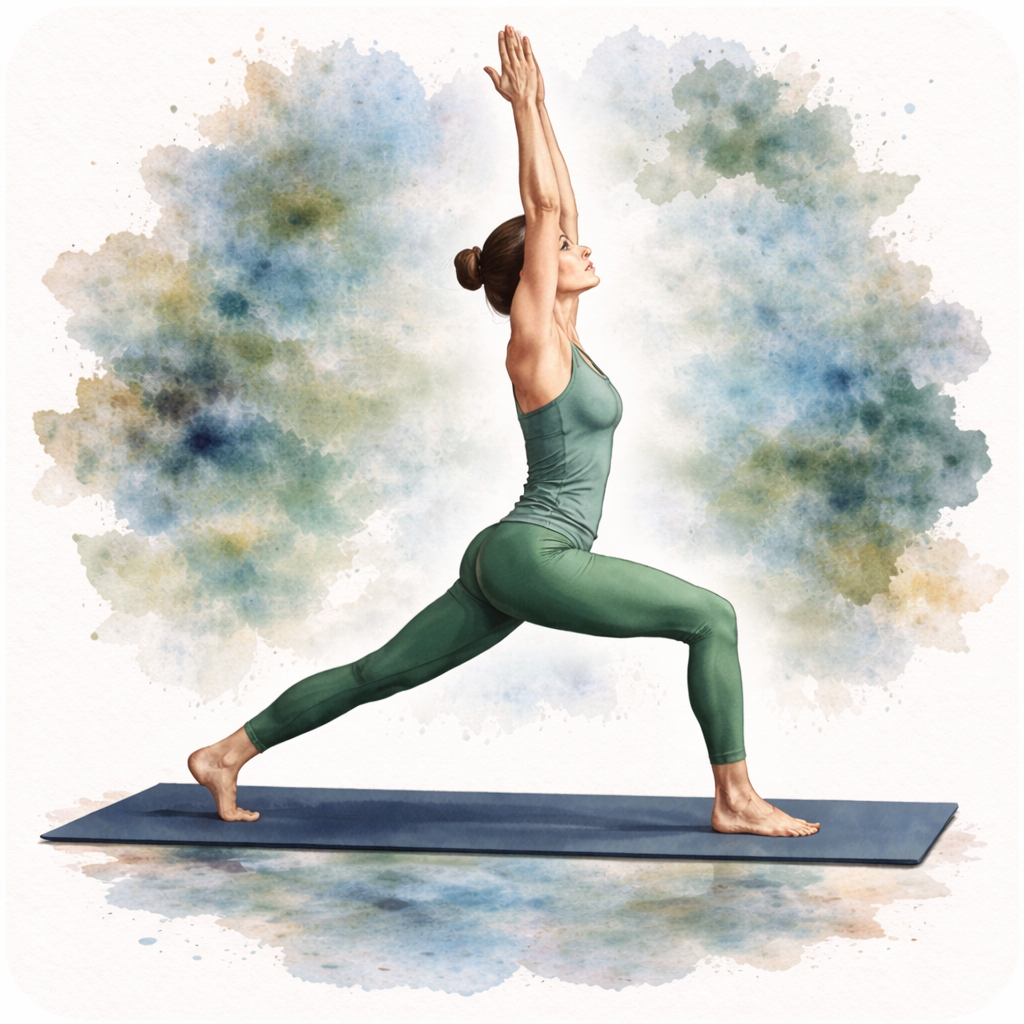
Warrior 1
Virabhadrasana I
veer-ah-bah-DRAH-sah-nah
Purpose
Builds hip flexor opening, leg strength, and shoulder stability. Develops focus, groundedness, and power. The first of the warrior poses — establishing the warrior stance.
Key Cues
- • Back foot at 45 degrees, heel grounded
- • Bend front knee over ankle
- • Hips face forward (square the hips)
- • Arms overhead or hands at heart center
Muscles
quadriceps · hip flexors · glutes · deltoids · core stabilizers
Modifications
- • Shorten the stance if the hip flexor stretch is too intense
- • Hands at heart center if shoulders are tight
- • Back heel can lift slightly if hips won't square
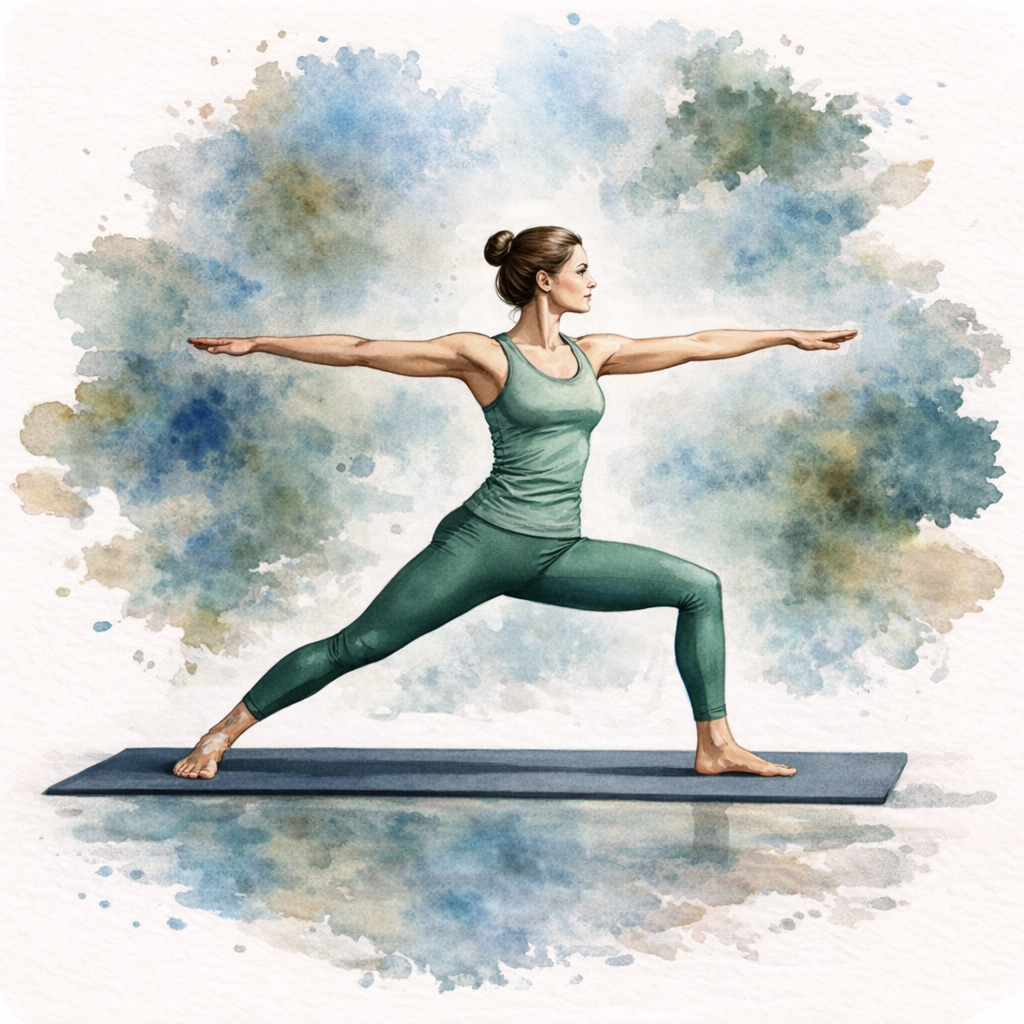
Warrior 2
Virabhadrasana II
veer-ah-bah-DRAH-sah-nah
Purpose
Strengthens legs and hips, opens the groin and chest, and develops stamina and concentration. The wide stance and open hips create a feeling of expansive power.
Key Cues
- • Open hips and arms to the sides
- • Front knee over ankle, tracking toward second toe
- • Gaze over the front fingertip
- • Back arm reaches long — energy in both directions
Muscles
quadriceps · glutes · hip adductors · deltoids · core stabilizers
Modifications
- • Shorten the stance if it feels too wide
- • Don't bend the front knee as deeply
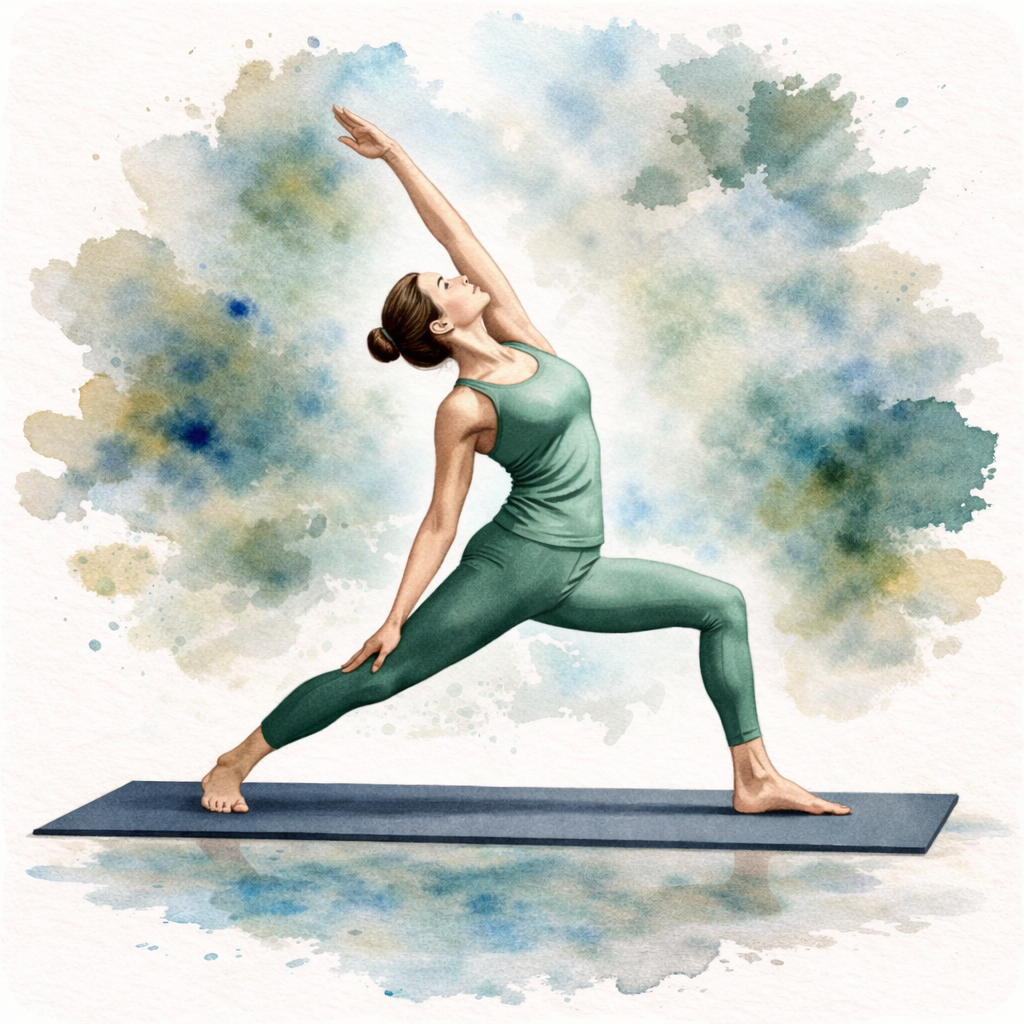
Exalted Warrior
Viparita Virabhadrasana
vee-pah-REE-tah veer-ah-bah-DRAH-sah-nah
Purpose
Stretches the side body and intercostal muscles, opens the chest, and creates space in the ribcage for breath. A heart-opening pose that builds on the Warrior 2 stance.
Key Cues
- • Raise front arm up toward the sky
- • Back arm rests lightly on back leg
- • Lean back gently — keep the front knee bent
- • Feel the stretch through the entire side body
Muscles
obliques · intercostals · latissimus dorsi · quadriceps · hip flexors
Modifications
- • Keep the lean subtle if lower back is sensitive
- • Hand on hip instead of sliding down the back leg
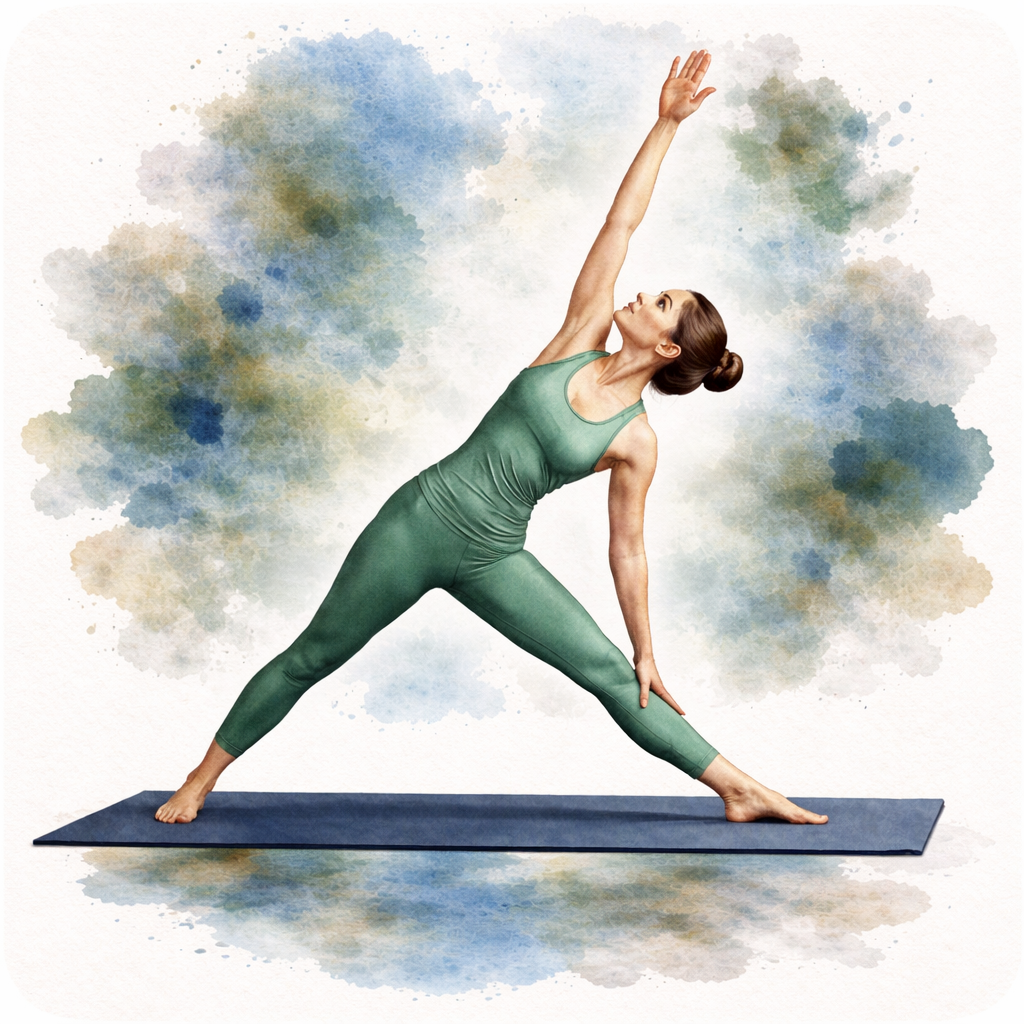
Exalted Triangle
Viparita Trikonasana
vee-pah-REE-tah tree-koh-NAH-sah-nah
Purpose
Combines the straight-leg alignment of Triangle with the side-body opening of Exalted Warrior. Stretches the intercostals and lateral body while lengthening the hamstrings.
Key Cues
- • Straighten the front leg (micro-bend is fine)
- • Raise front arm up toward the sky
- • Back arm rests lightly on back leg
- • Lean back gently — feel the stretch through the entire side body
Muscles
obliques · intercostals · hamstrings · latissimus dorsi · quadriceps
Modifications
- • Keep the lean subtle if lower back is sensitive
- • Micro-bend in the front knee to protect the joint
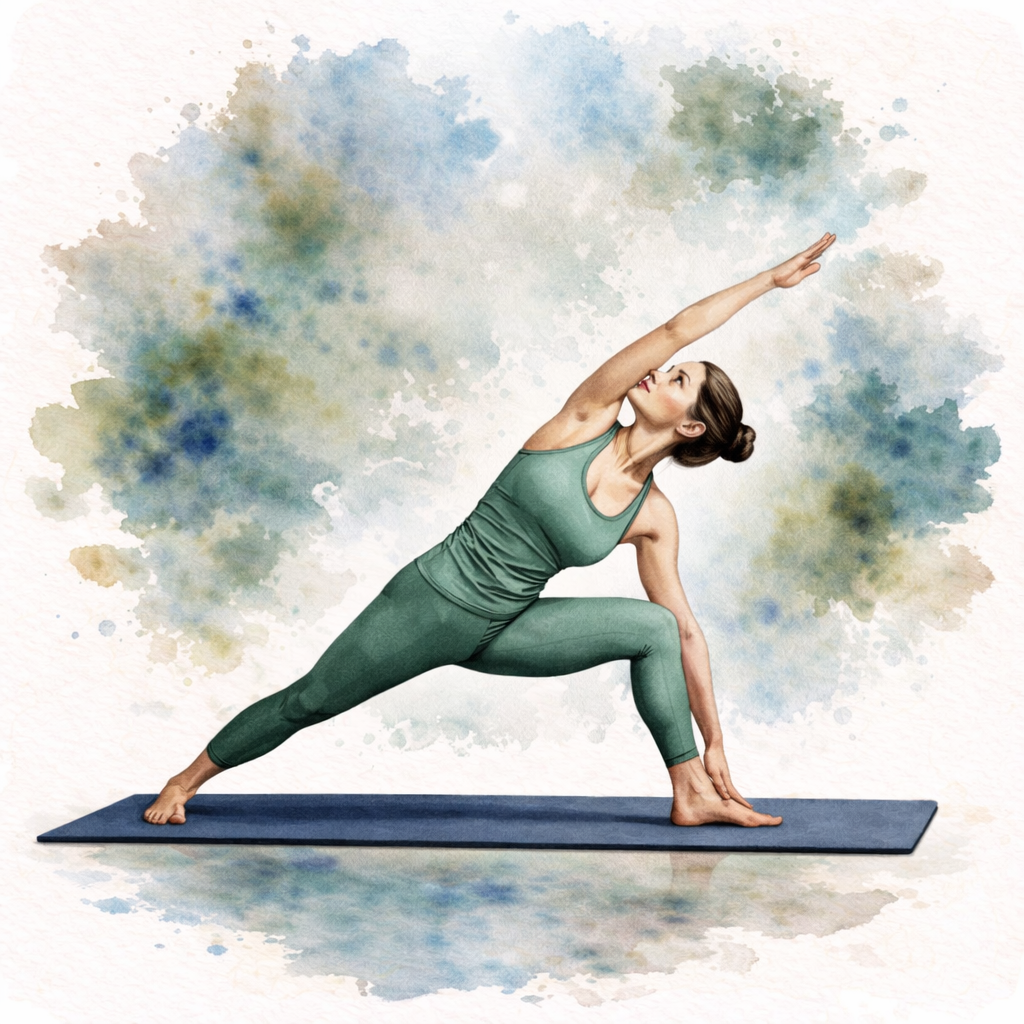
Supported Side Angle
Utthita Parsvakonasana (variation)
oo-TEE-tah PARS-vah-koh-NAH-sah-nah
Purpose
Lengthens the entire side body from heel to fingertips. Strengthens the legs and opens the hip and chest. The supported variation makes it accessible while keeping the full-body stretch.
Key Cues
- • Front forearm rests on front thigh
- • Top arm reaches over the ear, lengthening the body
- • Keep the front knee over the ankle
- • Open the chest toward the sky
Muscles
obliques · hip adductors · quadriceps · latissimus dorsi · deltoids
Modifications
- • Hand on a block instead of the floor
- • Top arm on hip if shoulder is tight
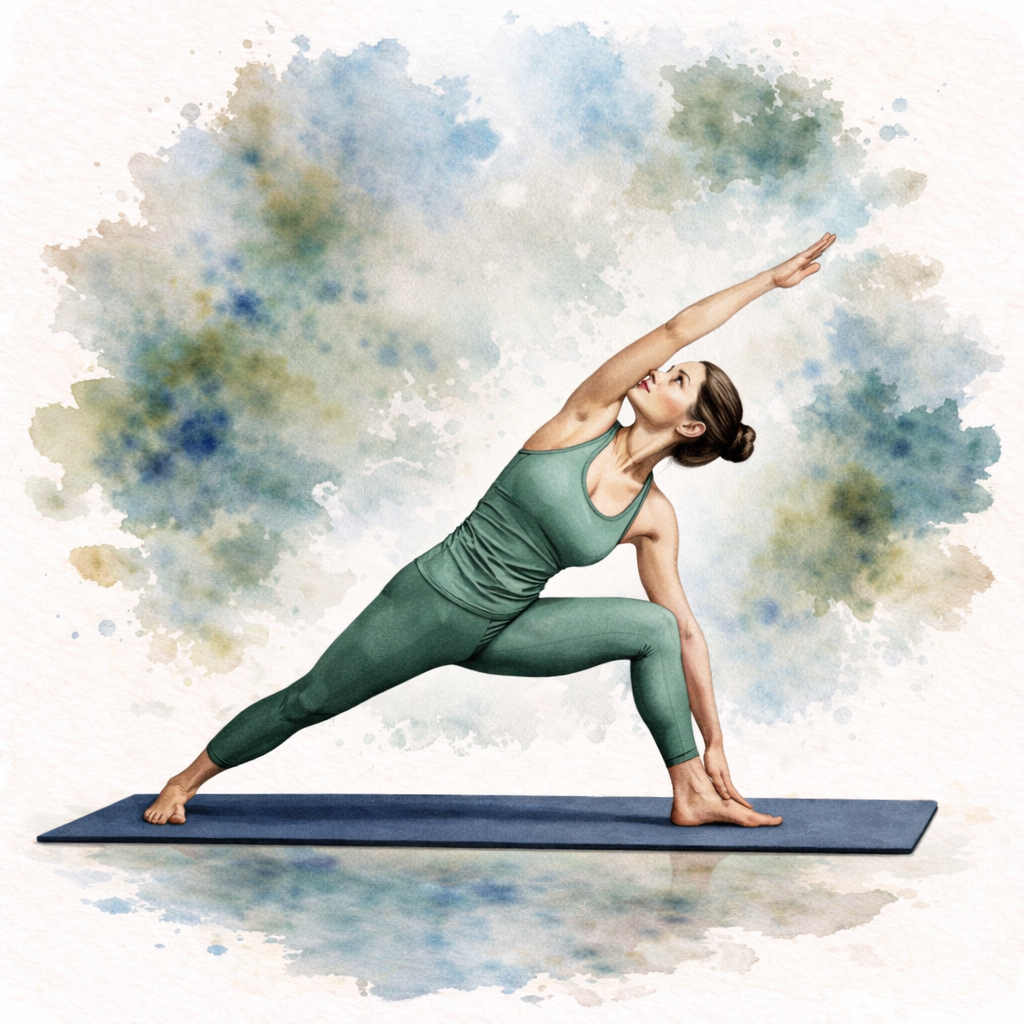
Standing Side Stretch
Parsva Urdhva Hastasana
PARS-vah OORD-vah hah-STAH-sah-nah
Purpose
Opens the intercostal muscles and lateral fascia. Counteracts compression from sitting and improves lung capacity by stretching the side body.
Key Cues
- • Arms overhead — reach tall first
- • One hand takes the opposite wrist and draws it to the side
- • Feel the length along the stretched side
- • Return to center before switching sides
Muscles
obliques · intercostals · latissimus dorsi · quadratus lumborum
Modifications
- • Keep the lean subtle if balance is challenging
- • Widen the stance for more stability
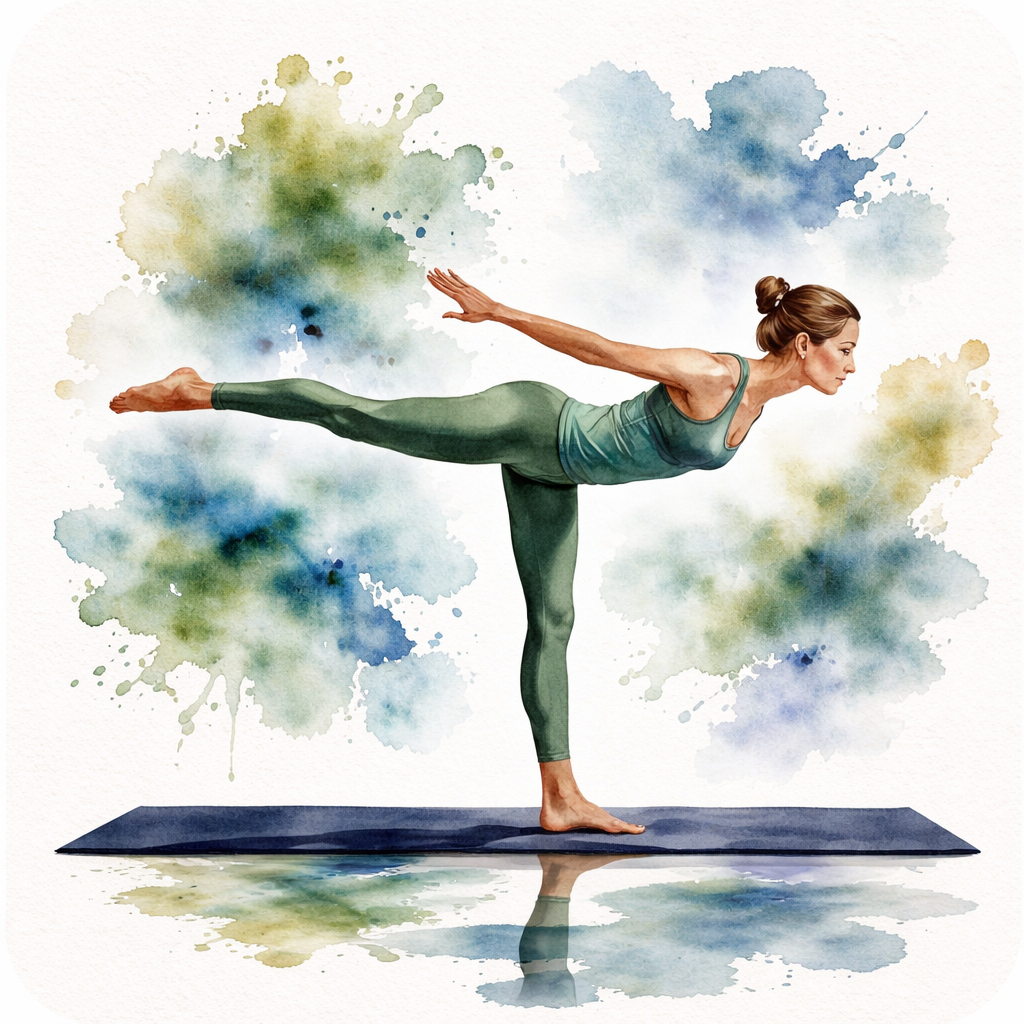
Warrior 3 / Airplane
Virabhadrasana III
veer-ah-bah-DRAH-sah-nah
Purpose
Develops single-leg balance, strengthens the posterior chain (glutes, hamstrings, back), and builds concentration and proprioception. One of the most challenging balance poses in this sequence.
Key Cues
- • Fix your gaze on a still point (drishti)
- • Hinge forward from the hips
- • Float the back leg up — it doesn't need to be high
- • Arms reach forward (airplane) or hands to hips
Muscles
glutes · hamstrings · erector spinae · core stabilizers · standing leg quadriceps
Modifications
- • Hands on hips for more stability
- • Fingertips on a wall or chair for balance support
- • Keep the lifted leg lower
Alerts
- • Move slowly into this pose — rushing increases fall risk
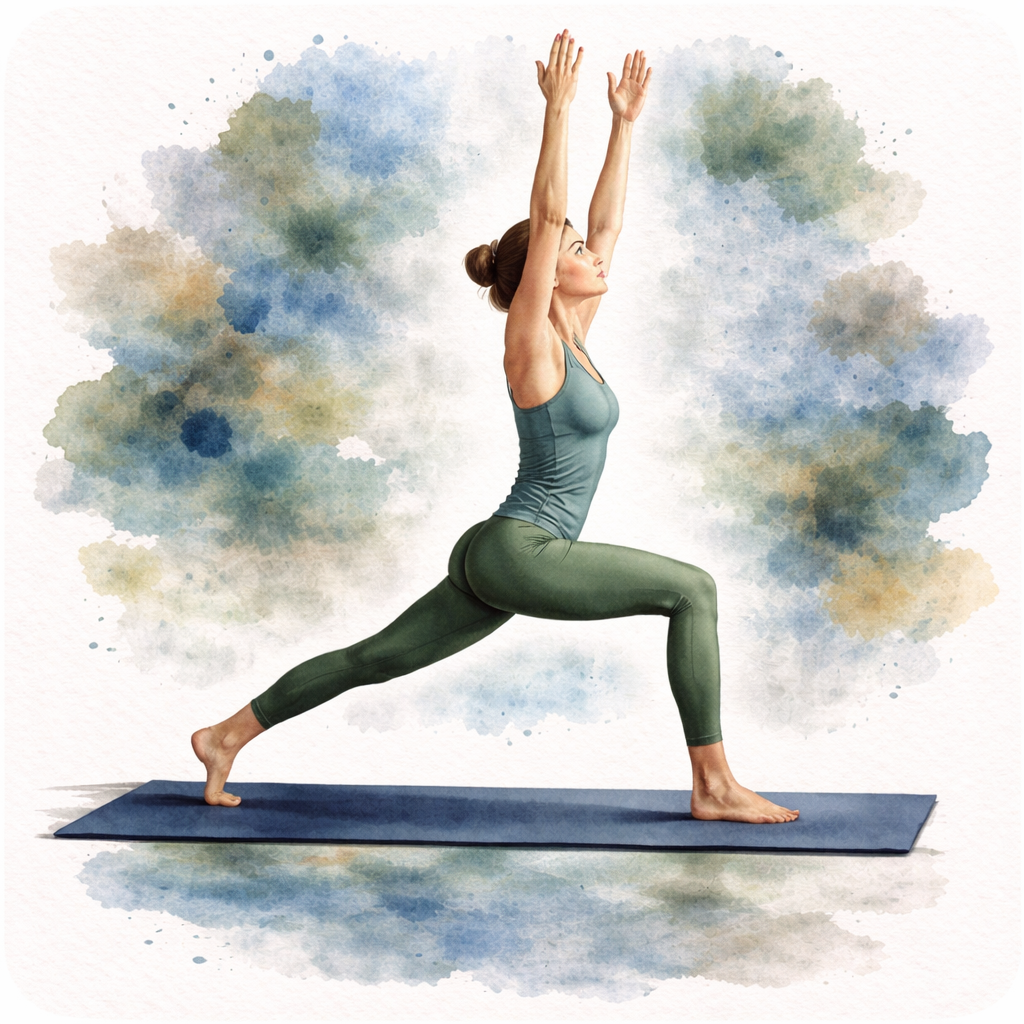
High Lunge
Ashta Chandrasana
ASH-tah chahn-DRAH-sah-nah
Purpose
Stretches the hip flexors, strengthens the legs, and prepares the body for standing balance transitions. The lifted back heel adds a balance challenge beyond Warrior 1.
Key Cues
- • Front knee over ankle, bent at 90 degrees
- • Back heel lifted, ball of foot on the mat
- • Arms sweep up overhead
- • Keep hips square and level
Muscles
quadriceps · hip flexors · glutes · calves · core stabilizers
Modifications
- • Lower the back knee to the mat for a Low Lunge
- • Hands at heart center if shoulders are tight
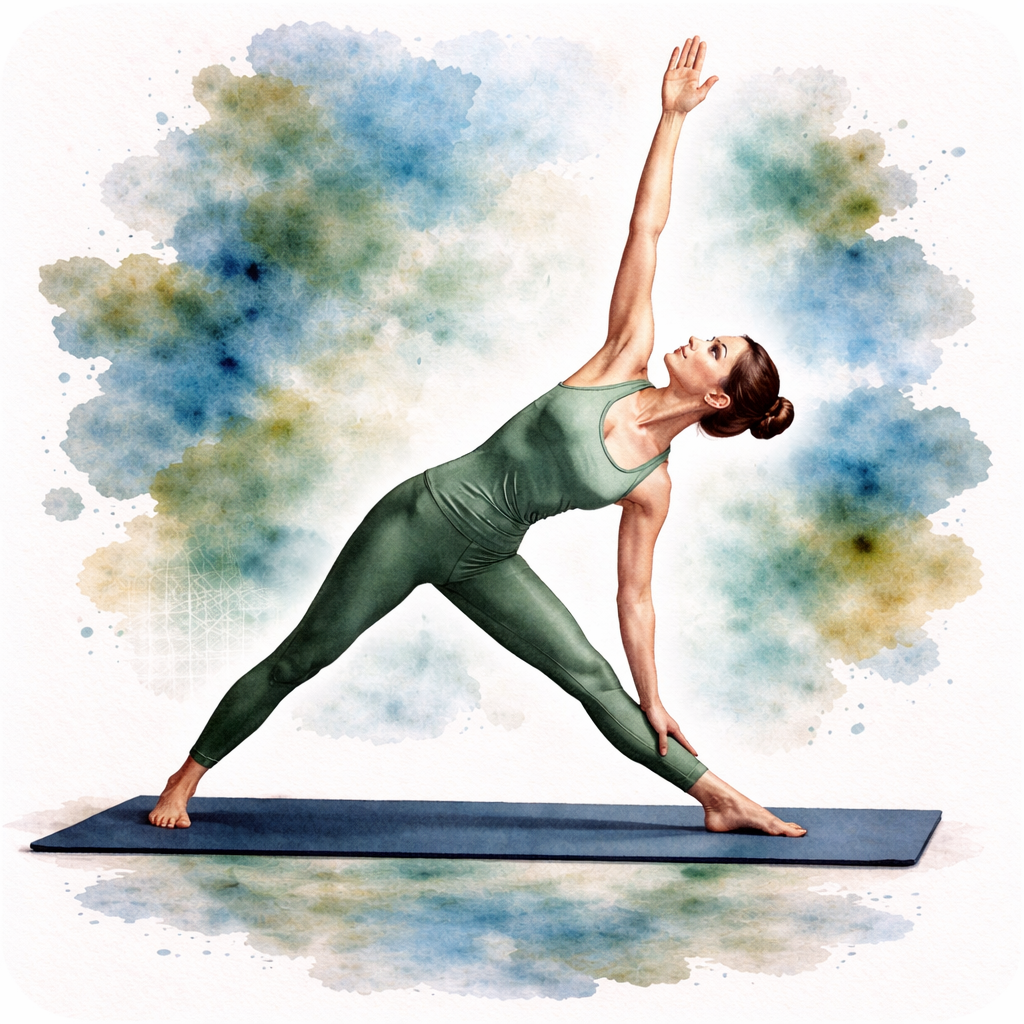
Triangle
Trikonasana
tree-koh-NAH-sah-nah
Purpose
Stretches the hamstrings, hips, and spine. Opens the chest and improves balance and full-body alignment. One of the foundational standing poses in yoga.
Key Cues
- • Straighten the front leg (micro-bend is fine)
- • Arms level — then tilt: front hand down to shin or floor
- • Top arm lifts straight up — stack shoulders
- • Open the chest toward the sky
Muscles
hamstrings · obliques · hip adductors · quadriceps · intercostals
Modifications
- • Hand on a block instead of the floor
- • Micro-bend in the front knee to protect the joint
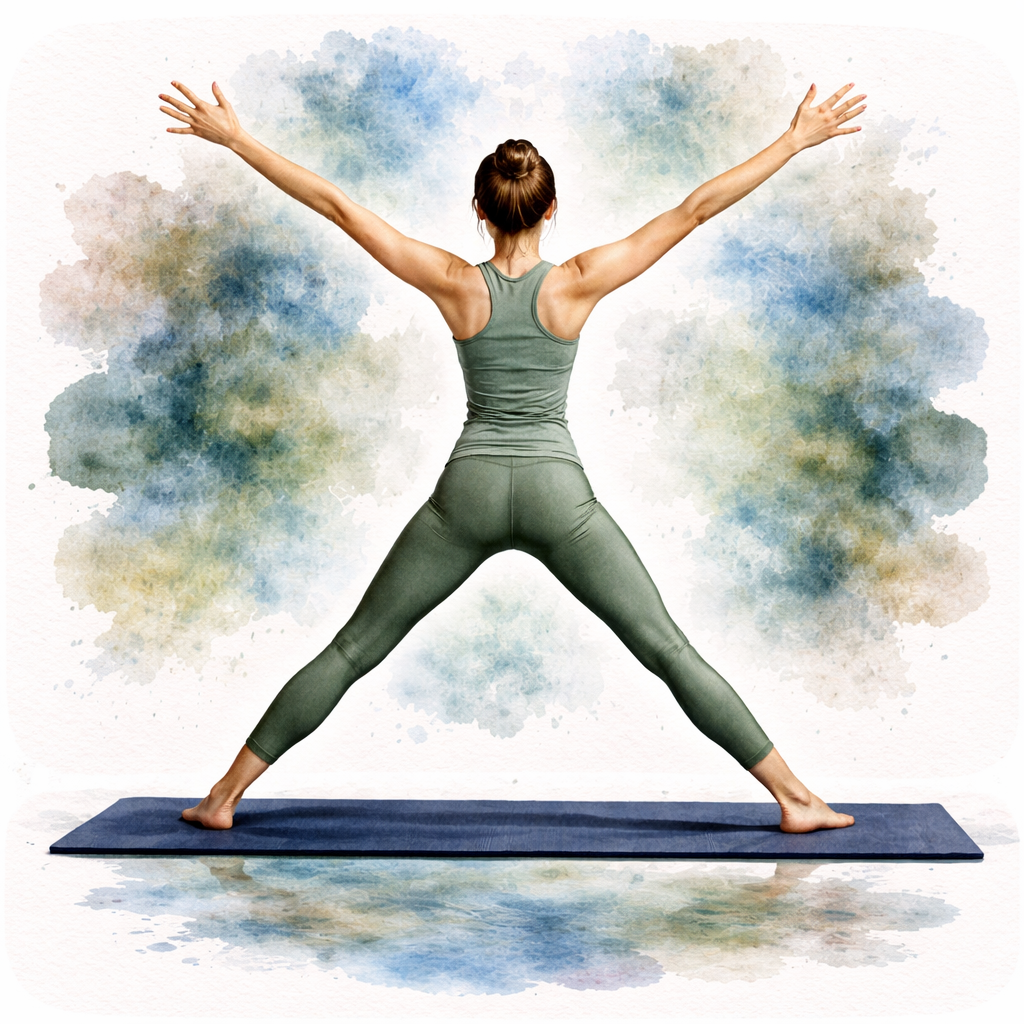
Five Pointed Star
Utthita Tadasana
oo-TEE-tah tah-DAH-sah-nah
Purpose
Opens the body wide to all five points — hands, feet, and crown. Energizes, expands awareness, and creates space in the joints. A moment of expansive energy between focused poses.
Key Cues
- • Step feet wide — wider than Warrior 2 stance
- • Arms out to the sides, fingers spread wide
- • Feel energy radiating out in five directions
- • Take a full breath — expand in all directions
Muscles
deltoids · hip adductors · quadriceps · core stabilizers
Modifications
- • Narrow the stance if it feels too wide
- • Arms at shoulder height or lower if shoulders are tight
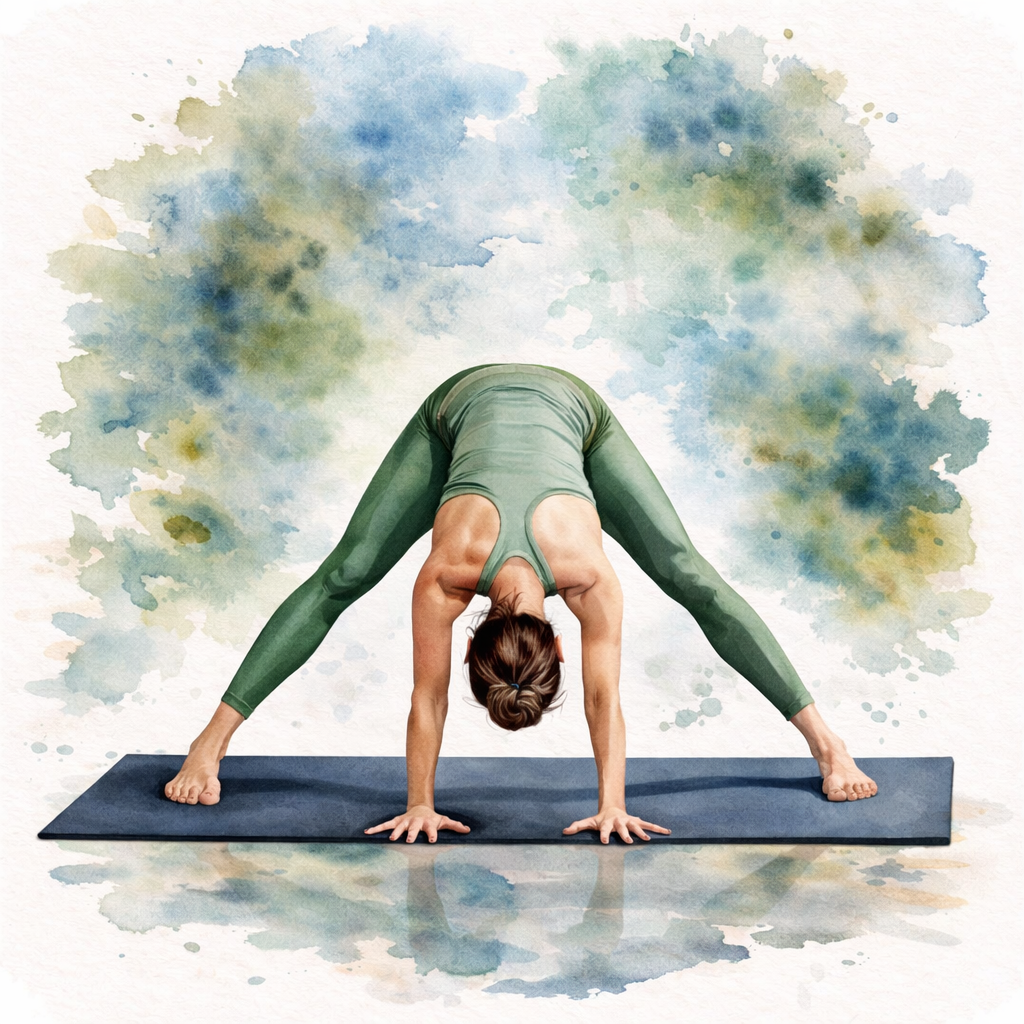
Wide Straddle Fold
Prasarita Padottanasana
prah-sah-REE-tah pah-doh-tahn-AH-sah-nah
Purpose
Deeply stretches the hamstrings, inner thighs, and lower back. Calms the nervous system with the inversion. A grounding pose that creates space in the inner legs.
Key Cues
- • Hinge forward from the hips — not the waist
- • Hands come to the mat or your legs
- • Let your head hang heavy
- • Breathe into your back body
Muscles
hamstrings · hip adductors · erector spinae · calves
Modifications
- • Hands on blocks if they don't reach the floor
- • Bend knees slightly to focus on spine length
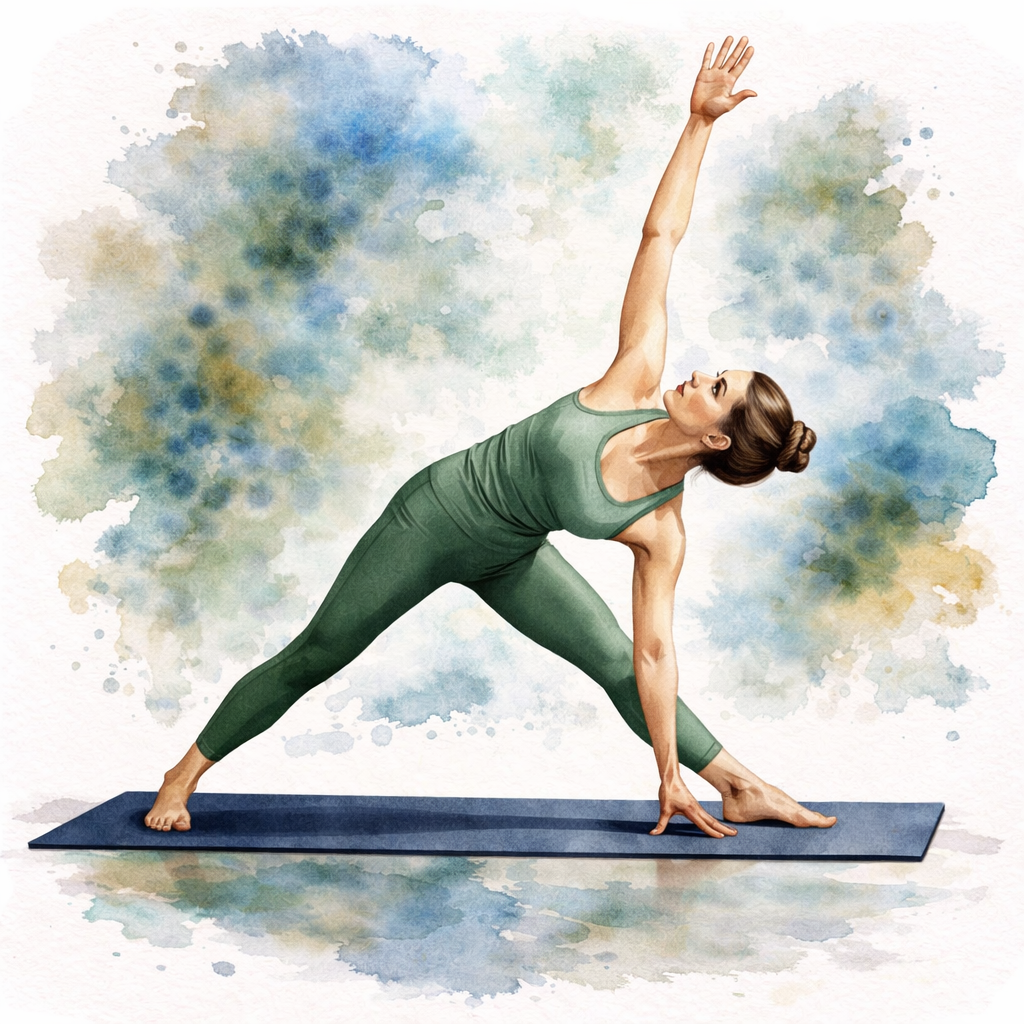
Straddle Twist
Prasarita Padottanasana (variation)
prah-sah-REE-tah pah-doh-tahn-AH-sah-nah
Purpose
Adds lateral stretch and thoracic rotation to the wide-legged fold. Opens the side body and spine while the legs stay grounded.
Key Cues
- • From the fold, plant one hand on the mat
- • Spiral the other arm open toward the sky
- • Breathe here, then switch sides
- • Keep both feet grounded and legs strong
Muscles
obliques · thoracic rotators · hamstrings · deltoids
Modifications
- • Plant the hand on a block for more space
- • Keep the twist subtle if it feels intense
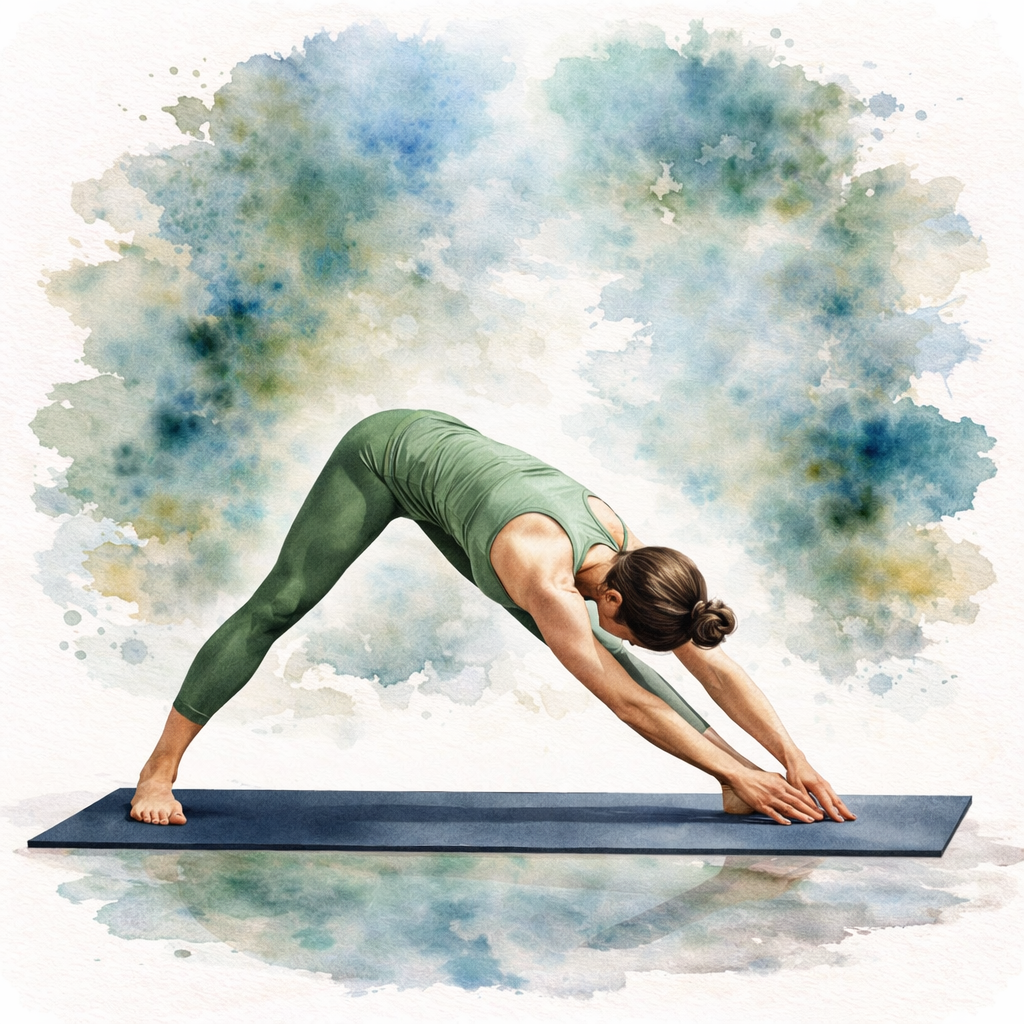
Straddle Side Stretch
Prasarita Padottanasana (variation)
prah-sah-REE-tah pah-doh-tahn-AH-sah-nah
Purpose
Deepens the wide-legged fold by adding a lateral hamstring and inner-thigh stretch. Walking the hands toward each foot targets one side at a time, creating a focused stretch along the inner leg.
Key Cues
- • From wide straddle fold, walk both hands toward the right foot
- • Pause and breathe — feel the stretch along the left inner thigh
- • Walk the hands back through center
- • Walk both hands toward the left foot and hold
Muscles
hamstrings · hip adductors · erector spinae · calves
Modifications
- • Hands on blocks if they don't reach the floor
- • Bend the knee of the side you're stretching toward for less intensity
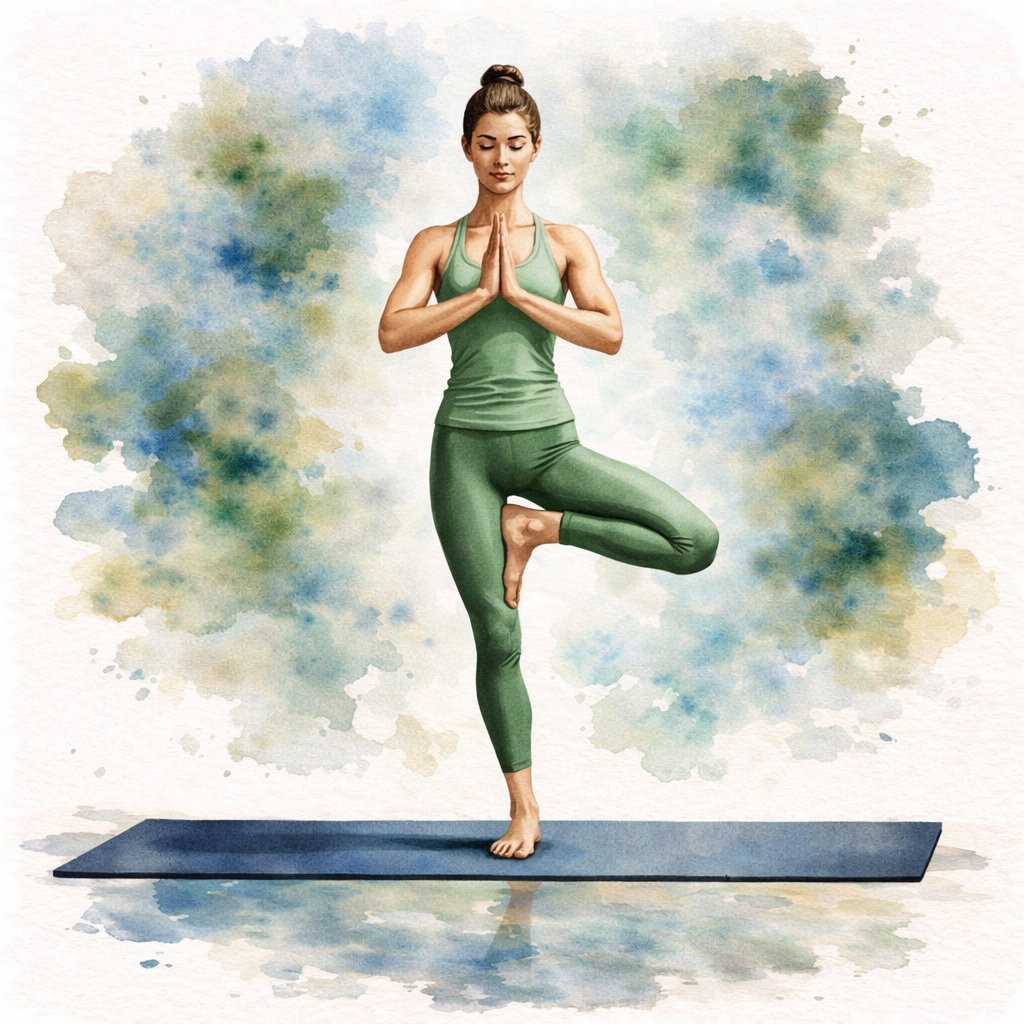
Tree Pose
Vrksasana
vrik-SHAH-sah-nah
Purpose
Strengthens the standing leg and foot, improves single-leg balance and proprioception, and cultivates stillness and focus. A pose about finding stability through rooting down.
Key Cues
- • Shift weight into one foot — root down through all four corners
- • Place opposite foot on ankle, calf, or inner thigh (never the knee)
- • Hands to heart or arms overhead like branches
- • Find a still point with your eyes — drishti
Muscles
standing leg glutes · standing leg quadriceps · foot intrinsic muscles · core stabilizers · hip abductors
Modifications
- • Foot on ankle with toes on the floor for less balance demand
- • Stand near a wall for support
- • Hands at heart center for more stability than arms overhead
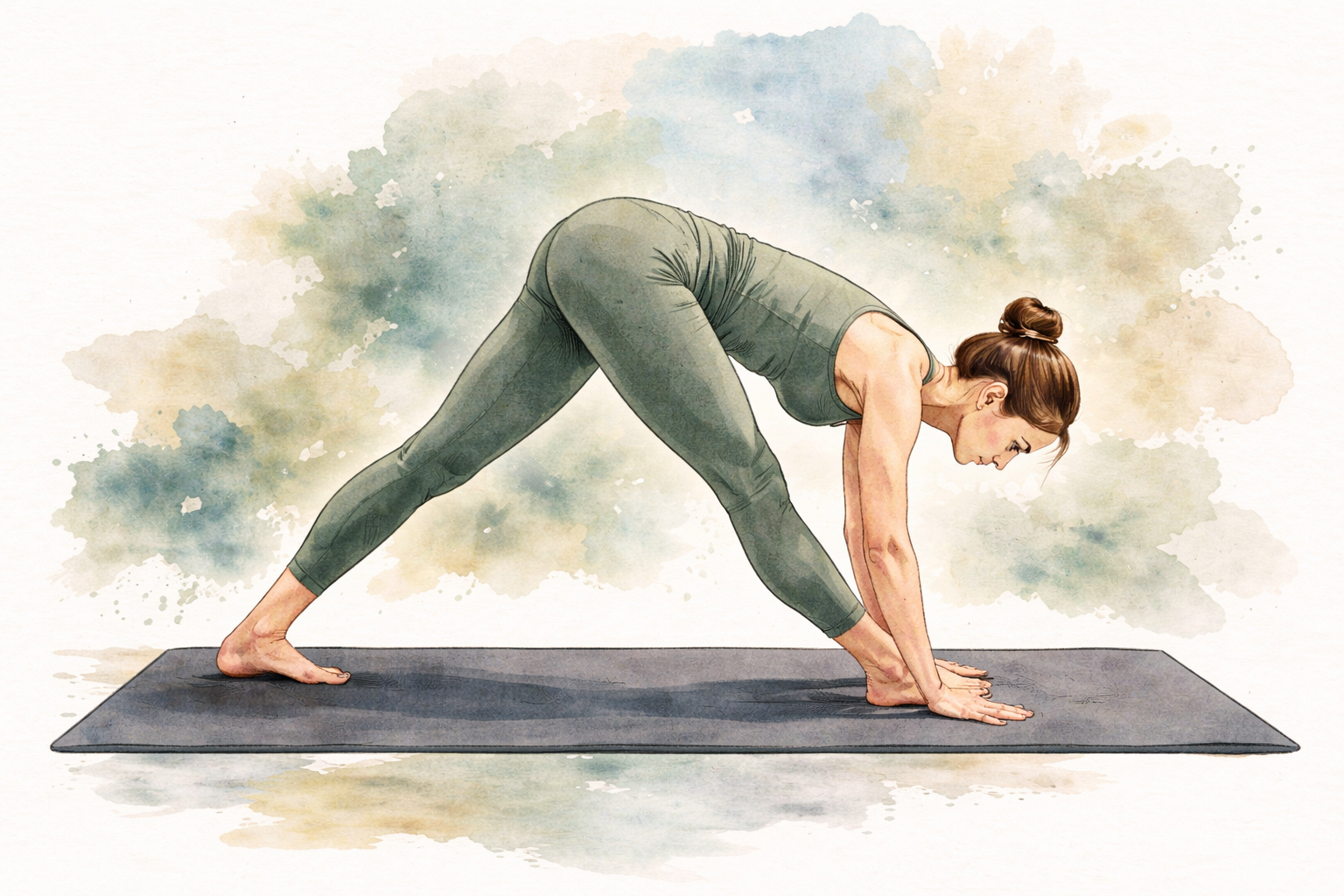
Head-to-Knee
Parsvottanasana
par-shvo-tah-NAH-sah-nah
Purpose
An intense stretch for the hamstrings and calves with a narrow stance that challenges balance. Teaches patience in a deep forward fold over the front leg while keeping the hips square.
Key Cues
- • Step one foot back — shorter stance than Warrior, feet hip-width apart
- • Square hips toward the front of your mat
- • Hinge at the hips and fold over your front leg
- • Hands frame the front foot or rest on blocks
Muscles
hamstrings · calves · hip flexors · spinal extensors · glutes
Modifications
- • Bend the front knee slightly if hamstrings are tight
- • Use blocks under both hands for more space
- • Shorten the stance for better balance
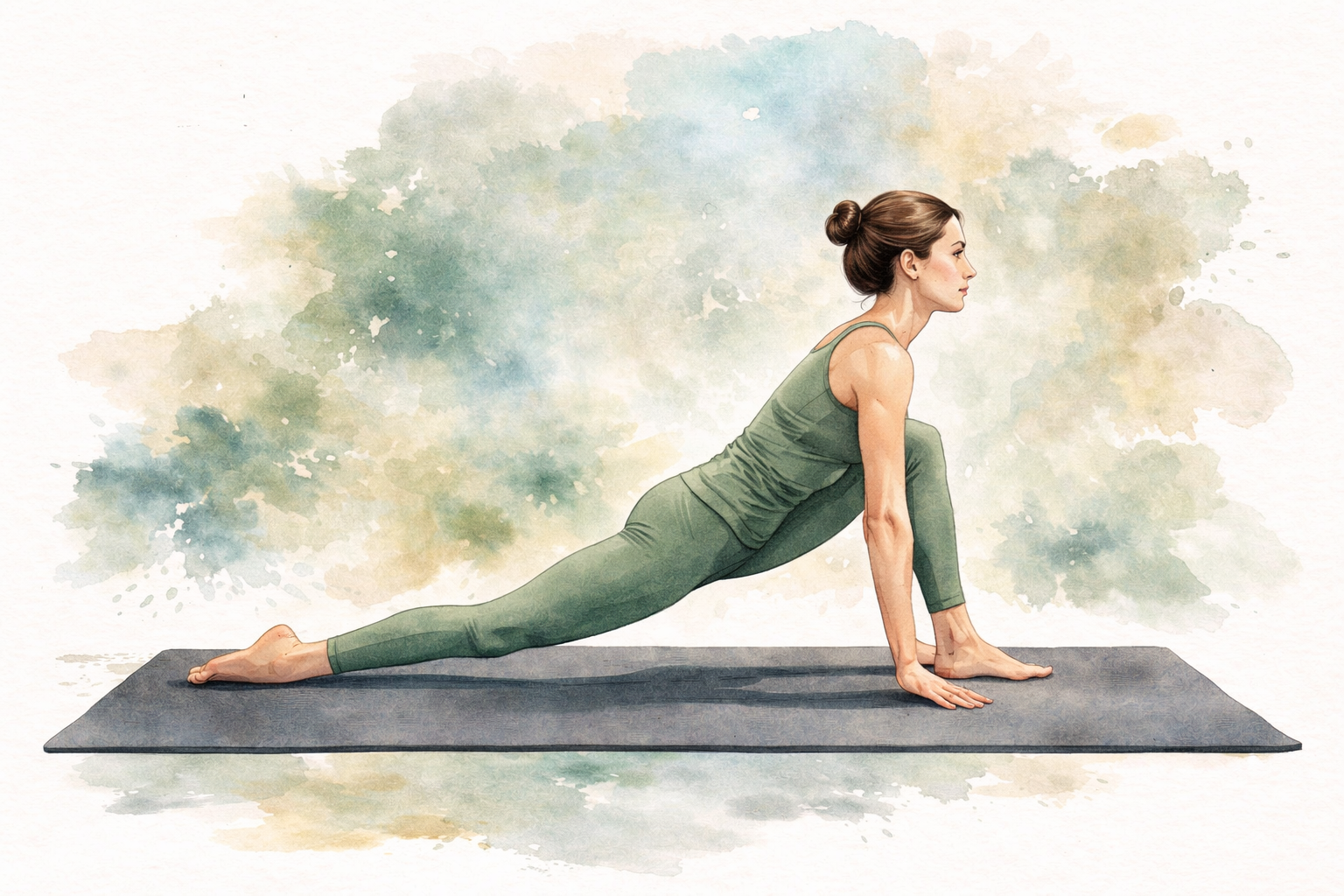
Low Lunge
Anjaneyasana
AHN-jah-nay-AH-sah-nah
Purpose
Opens the hip flexors and stretches the psoas with the back knee lowered. A grounding variation of the lunge that prepares the body for deeper hip openers like Lizard and Half Split.
Key Cues
- • Lower the back knee to the mat
- • Front knee stacks over the ankle
- • Hands frame the front foot on the mat or blocks
- • Let the hips sink forward and down
Muscles
hip flexors · psoas · quadriceps · hamstrings · glutes
Modifications
- • Pad the back knee with a blanket for comfort
- • Place hands on blocks for more height
- • Keep the torso upright if the fold feels too deep
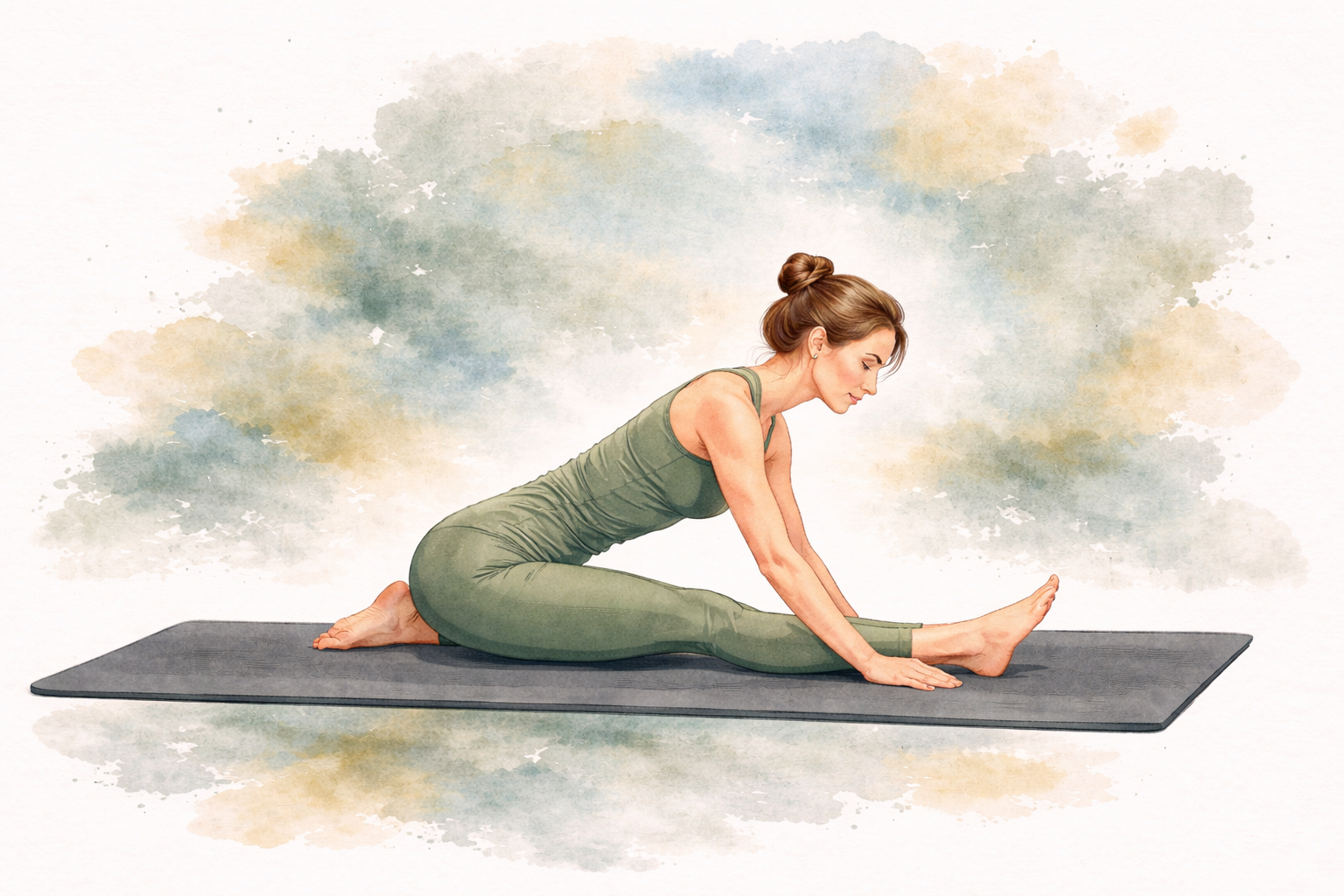
Half Split
Ardha Hanumanasana
AR-dah hah-new-mah-NAH-sah-nah
Purpose
A deep hamstring stretch that shifts the hips back over the rear knee and straightens the front leg. Teaches patience and breath in intensity — a pose where stillness matters more than depth.
Key Cues
- • Shift your hips straight back over the back knee
- • Straighten the front leg and flex the front foot
- • Fold gently over the front leg — only as far as feels right
- • Hands on the mat or blocks beside the front leg
Muscles
hamstrings · calves · hip flexors · spinal extensors
Modifications
- • Keep a slight bend in the front knee
- • Use blocks under both hands
- • Stay higher in the fold — depth will come with time
Balancing Half Split
Ardha Hanumanasana (variation)
AR-dah hah-new-mah-NAH-sah-nah
Purpose
Deepens the hamstring stretch while building core engagement and back body awareness with arms reaching back alongside the body.
Key Cues
- • Stay in half split — front leg straight, back knee down
- • Walk your hands off the mat, arms reach back alongside your body
Muscles
hamstrings · core · spinal extensors · posterior deltoids
Modifications
- • Keep fingertips on the mat if balance is challenging
- • Micro-bend the front knee for comfort
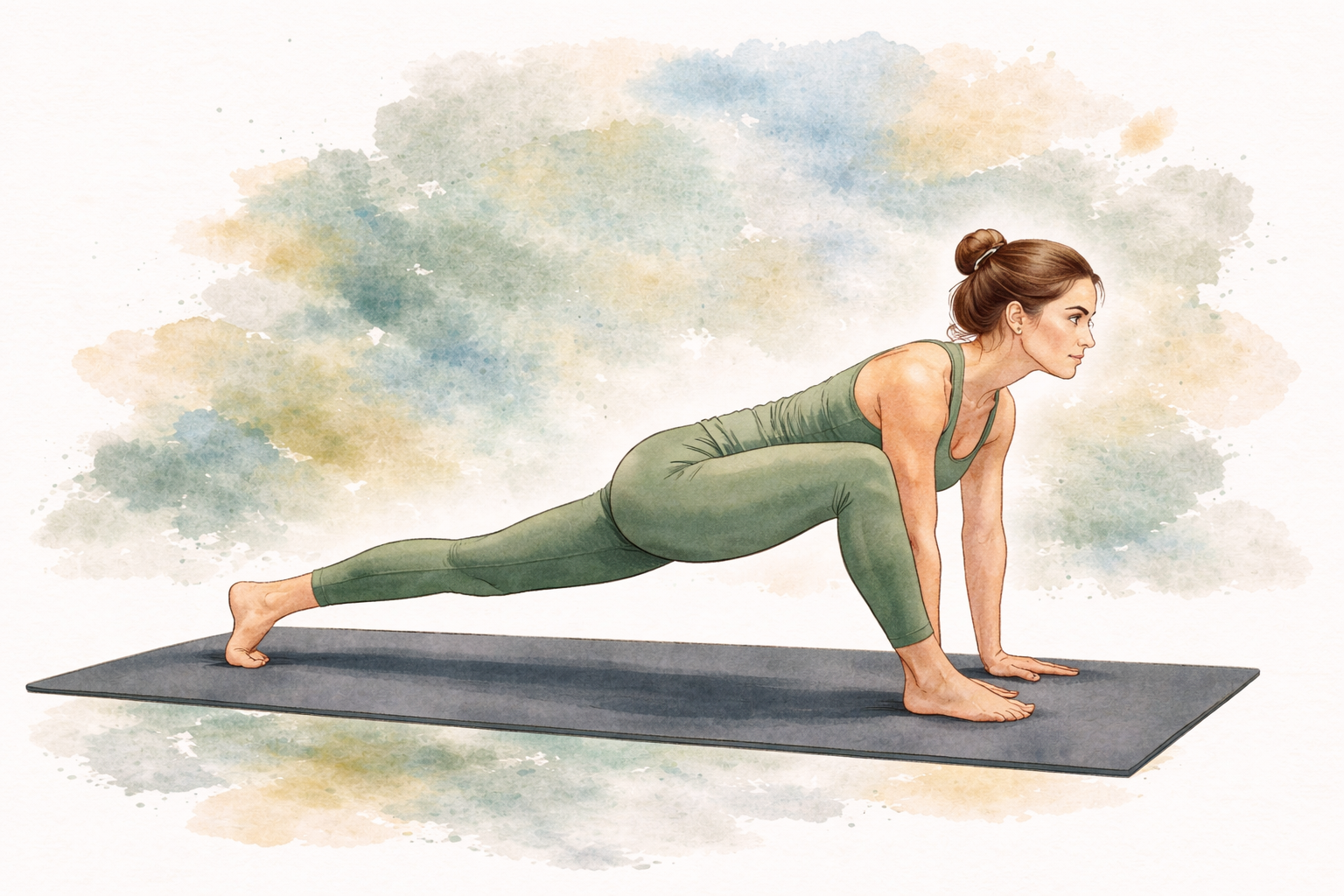
Lizard
Utthan Pristhasana
OOT-tahn prish-TAH-sah-nah
Purpose
A deep hip opener that targets the hip flexors, groin, and inner thighs. Both hands move inside the front foot, creating space to sink deeper into the hips. A pose that invites you to breathe through intensity.
Key Cues
- • Both hands inside the front foot
- • Back knee can stay up or lower to the mat
- • Option to come down to forearms for a deeper stretch
- • Let the front knee open slightly to the side
Muscles
hip flexors · groin · inner thighs · hamstrings · glutes
Modifications
- • Stay on hands instead of forearms
- • Lower the back knee to the mat
- • Place forearms on a block for a gentler variation